
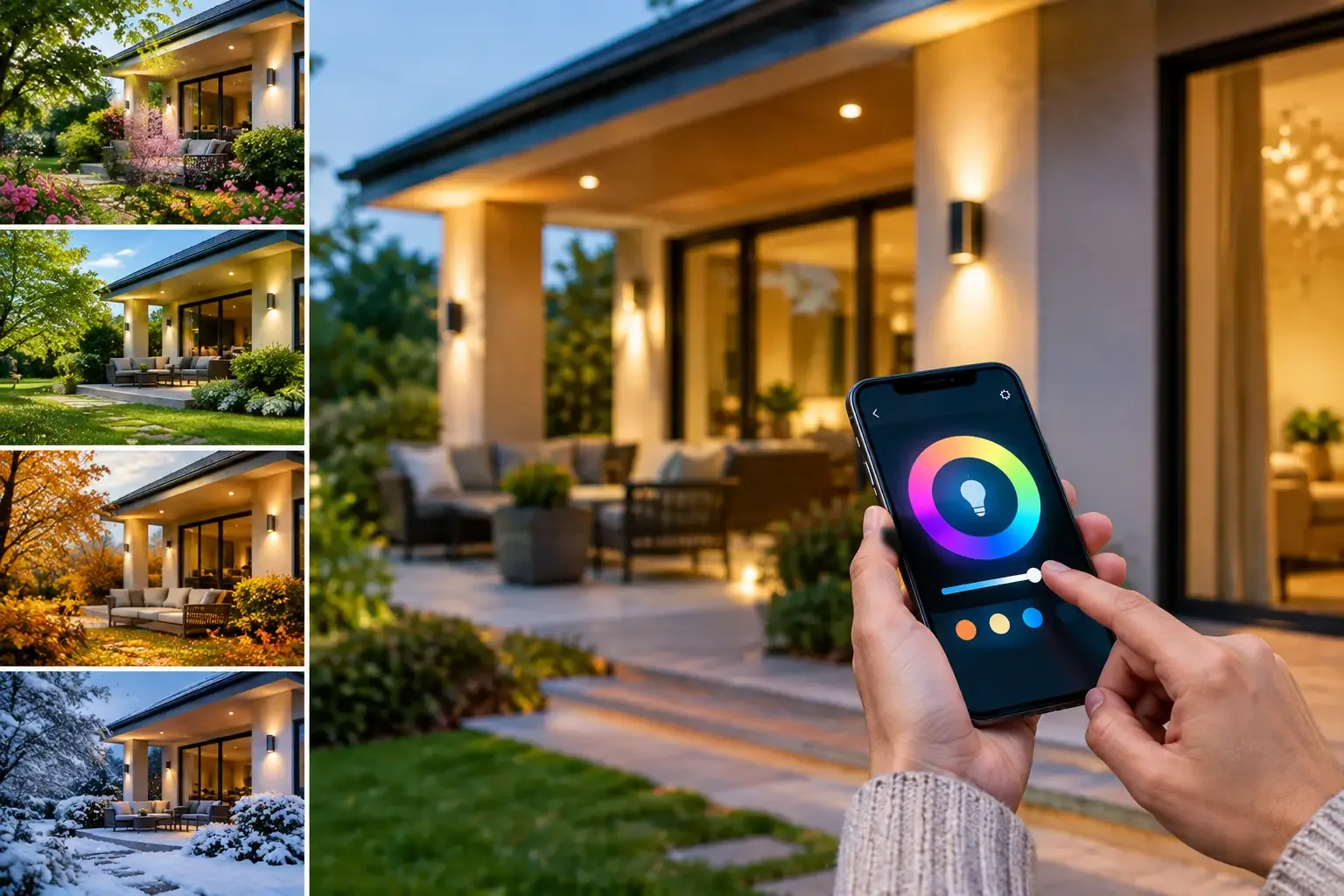
A home can look quietly finished after sunset without looking decorated for a holiday. That is the appeal of app controlled outdoor lights: they give you warm, architectural light for an ordinary Tuesday, then let you switch to full color when the calendar, game schedule, or occasion calls for it. The system stays in place. Your home simply changes its mood.
For many Colorado homeowners, that also means retiring the annual routine of ladders, tangled strands, burned-out bulbs, and bins that take up garage space until next December. Permanent roofline lighting is not a replacement for every outdoor fixture. It is a considered upgrade for the parts of your home people notice first: the peaks, eaves, gables, and trim that shape its silhouette at night.
What App Controlled Outdoor Lights Actually Change
The app is the part you use every day, but a well-designed permanent lighting system begins with the roofline. Low-profile lights are installed in a discreet track along selected architectural edges, with wiring planned to stay out of sight. In daylight, the goal is a clean finish that does not distract from the home. At night, the lights reveal the roofline with intention.
From your phone, you can choose warm white for a refined nightly look, select a color palette for a holiday, adjust brightness, and create schedules that fit your routine. A family birthday can have its own scene. A Broncos game can have another. Afterward, a few taps return the house to a soft white glow.
That flexibility matters because permanent lighting should not force one look all year. Bright, animated color may be perfect for Halloween or a graduation party, but it is rarely the right choice for every evening. The best systems make the understated setting just as easy to use as the celebratory one.
The Features That Make Daily Use Feel Simple
An app-controlled system should reduce decisions, not create a new technical project. Once your installation is complete and the controls are connected, most homeowners use a small set of practical features: scenes, zones, brightness, timers, and schedules.
A scene saves a color combination and effect so you do not need to recreate it each time. You might keep warm white as your default, save red, white, and blue for patriotic holidays, and use orange and purple for October. The exact options vary by system, but the value is consistent: your preferred looks are ready when you are.
Zones give larger or more complex homes added control. If the front roofline, garage peak, and patio edge are set up as separate zones, you can light them together or independently. This is useful when you want a welcoming front elevation while keeping a backyard gathering area more festive.
Brightness is where design judgment comes in. More light is not always better. A restrained warm-white setting can add depth to brick, stone, siding, and landscaping without overpowering the house or the street. For color scenes, dialing back the brightness often creates a more polished result than running every light at maximum output.
Timers and schedules handle the repetition. Set the lights to come on at dusk, turn off before bed, or run a holiday scene only during certain evening hours. This makes the system feel integrated into home life rather than another task waiting on your phone.
Why Professional Planning Matters More Than the App
The app gets attention because it is visible and familiar. Installation quality is what determines whether the lighting looks like part of the home.
Every roofline has different angles, gutters, trim conditions, access points, and electrical considerations. A thoughtful plan identifies the architectural lines worth highlighting and avoids crowding the elevation with light where it does not add value. It also maps controller placement and wiring paths before equipment goes up, helping preserve the clean-by-day appearance homeowners want.
This is especially relevant on Front Range homes, where rooflines can include multiple gables, tall peaks, varying materials, and exposed elevations. A lighting plan should be tailored to the house, not pulled from a one-size-fits-all diagram. The right layout might emphasize a dramatic front peak and garage line while leaving less visible sections unlit. Another home may benefit from a broader, balanced outline.
At Firefly Exterior Lighting, the process is consultation-led for that reason. Homeowners can share their address and roofline photos, review a visual preview, and discuss the scope before installation begins. That early planning is where practical details get resolved, from the intended look to equipment placement and access needs.
Warm White First, Color When It Counts
Permanent exterior lighting is often associated with Christmas, but the strongest reason to install it is the other eleven months of the year. Warm white lighting adds a finished nighttime presence to a home without requiring an event or a holiday.
It can make a dark facade feel more welcoming when you pull into the driveway. It can frame the home for guests, highlight a well-kept exterior, and add a subtle layer of curb appeal during long winter evenings. Unlike temporary strands, the system is already in place when you want it.
Color expands the possibilities without turning your home into a permanent display. Use it for Christmas, Halloween, Fourth of July, team colors, birthdays, and neighborhood celebrations. The trade-off is worth acknowledging: animated patterns and saturated colors attract more attention than soft white, and that may not suit every neighborhood or every homeowner. The benefit of app control is that you decide when the home is quiet and when it celebrates.
What to Consider Before Installing
A permanent lighting project is most successful when the aesthetic and practical questions are discussed together. Start with the home’s visible roofline and the impression you want after dark. Do you want a subtle warm-white outline most nights? Are holidays and family events a major priority? Would separate front and backyard control be useful?
Also consider access and power early. The controller needs a suitable location, and wiring routes should be planned around the exterior rather than improvised during installation. A professional assessment can identify these details and explain what is appropriate for your specific property.
Budget will depend on the length and complexity of the roofline, the number of zones, access conditions, and the design scope. Be cautious about comparing projects by linear footage alone. Two homes with similar visible roofline length can require very different planning and installation work because of height, peaks, trim, and electrical routing.
Ask how the system will look during the day, how controls are set up, what training is included, and what warranty or service terms apply. A clear proposal should help you understand the installation rather than leave you guessing about what is included.
A Better Alternative to Seasonal Setup
Temporary holiday lights have their place, especially for a short-term display. But they ask a lot of homeowners each year: purchase, test, hang, repair, remove, store, and repeat. They can also look inconsistent from season to season as strands age or roofline clips shift.
Permanent app controlled outdoor lights move that work into a single, professionally planned installation. Afterward, your role is much simpler. Pick a scene, make an adjustment if you want to, and let the schedule handle the rest.
The real value is not having every night look like a celebration. It is having a home that can look composed on an ordinary evening and unforgettable when the moment deserves it. Start by looking at your roofline after sunset and deciding which lines are worth carrying into the night.