
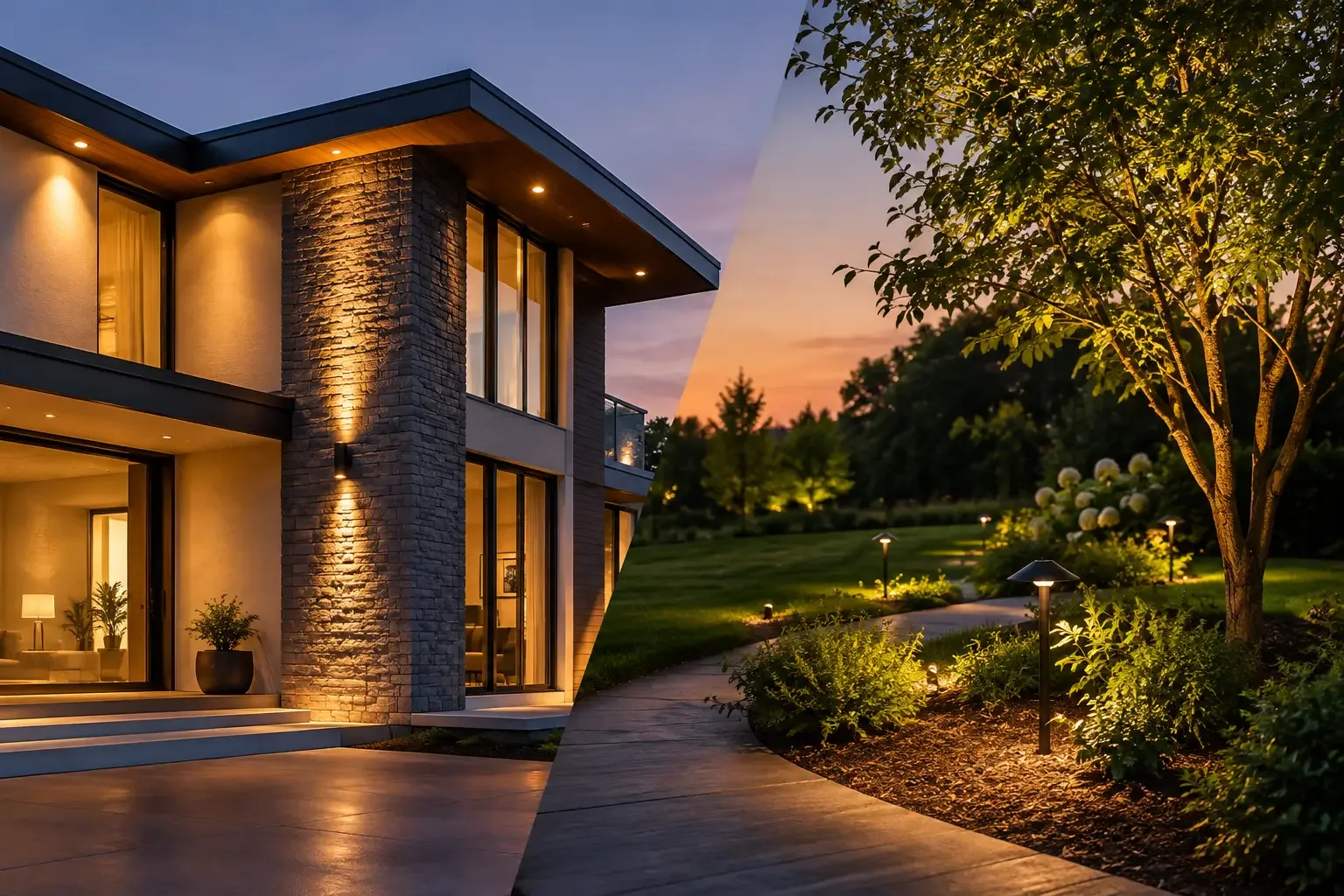
A home can look completely different after sunset, but the result depends on what you choose to illuminate. Architectural lighting vs landscape lighting is not simply a choice between two fixture styles. It is a decision about whether the eye is drawn first to the home itself, the property around it, or a deliberate combination of both.
For homeowners who take pride in a clean exterior, the distinction matters. A well-planned lighting design adds warmth, definition, and usability without making the front of the house feel busy. The best approach starts with the features you want people to notice from the street, the driveway, and the patio.
What Is Architectural Lighting?
Architectural lighting highlights the structure of the home. It may follow the roofline, outline a gable, emphasize trim, or draw attention to a distinctive facade. The goal is to reveal the shape, scale, and character of the architecture after dark.
Permanent roofline lighting is one of the most refined examples. Low-profile lights are installed in a discreet track beneath the eaves or along selected trim lines. During the day, the system is designed to blend into the home. At night, warm white lighting can create a polished, welcoming outline that feels intentional rather than seasonal.
For special occasions, the same roofline can become a color-capable canvas. A homeowner might use soft amber for a fall gathering, red and green for Christmas, team colors for game day, or a custom birthday scene. The architecture stays at the center of the design, while the color and pattern change to suit the moment.
Architectural lighting is especially effective for homes with visible rooflines, multiple gables, stone details, covered entries, or strong front elevations. It improves curb appeal because it gives the house a clear nighttime presence, even when the yard is simple or the landscaping is less mature.
What Is Landscape Lighting?
Landscape lighting focuses on the outdoor environment around the home. It can illuminate pathways, plant beds, mature trees, retaining walls, water features, patios, and outdoor living areas. Its purpose is often a mix of safety, navigation, atmosphere, and visual depth.
A path light can make the walk from driveway to front door easier to see. Uplighting on a mature tree can add dimension to a dark front yard. Downlighting near a patio can make an outdoor dinner or evening conversation more comfortable. Unlike roofline lighting, landscape lighting often changes with the seasons, plant growth, and maintenance needs of the property.
It can also be less visible from across the street. That is not a weakness. A carefully lit landscape creates layers: a softly lit foreground, a defined entry, and a home that sits naturally behind it. On a heavily landscaped lot, those layers can feel dramatic and inviting.
Architectural Lighting vs Landscape Lighting: The Main Difference
The clearest difference is the focal point. Architectural lighting makes the house itself visible and expressive. Landscape lighting makes the grounds more usable and visually dimensional.
Architectural lighting tends to create a strong, consistent effect from the street. That makes it a natural fit for homeowners who want their home to look finished every evening and who want holiday lighting without ladders, tangled strands, or storage bins. With app controls, the same system can move from an understated warm-white setting to a celebratory color scene in seconds.
Landscape lighting is often more task-specific. It helps guests see a pathway, makes steps safer, extends time on a patio, and brings attention to trees or garden features that disappear after sunset. It can be the better first investment when a property has dark walkways, an active backyard, or landscaping that deserves to be seen.
Neither choice is automatically better. A home with a striking roofline but limited planting may gain more from architectural lighting. A home set back from the road with a long walk, large trees, and a backyard entertaining area may benefit first from landscape lighting. Many properties look best when the two systems are planned together, with one clearly taking the lead.
Everyday Curb Appeal and Holiday Color
This is where permanent architectural lighting offers a different kind of value. Traditional holiday strands are typically installed for a few weeks, then removed because they are difficult to maintain and do not suit every season. A permanent roofline system is designed for everyday use.
Warm-white settings can give the home a calm, elevated appearance on ordinary weeknights. Brightness can be adjusted so the lights complement the neighborhood rather than overpower it. Timers and schedules can turn the system on at dusk and off at a preferred hour, without requiring anyone to remember a switch.
When a holiday or celebration arrives, color is already built in. There is no weekend spent on a ladder, no untangling strands, and no guessing whether a section will fail in cold weather. Instead, homeowners can select scenes, control zones, adjust brightness, and return to an everyday setting when the event is over.
Landscape lighting can support that experience, but it serves a different role. Soft pathway or tree lighting adds depth below the roofline. It should not compete with a color scene overhead. When both are present, keeping the landscape lighting warm and restrained usually gives the exterior a more cohesive look.
Design Details That Keep Lighting Refined
Good exterior lighting is not about putting light on every surface. It is about choosing the right surfaces and leaving enough darkness between them. A roofline fully outlined in bright color may be perfect for a holiday, while a quieter warm-white treatment may feel better for the rest of the year.
For architectural lighting, placement matters as much as output. Tracks should follow the home’s lines cleanly, wiring should be routed discreetly, and controller placement should be practical without becoming visible. Roofline angles, soffit depth, trim colors, power access, and the view from the street all affect the final plan.
For landscape lighting, glare is the detail to watch. Fixtures should direct light where it is needed instead of shining into windows, across a neighbor’s property, or straight into someone’s eyes. Plant growth also matters. A fixture that beautifully uplights a young ornamental tree may need adjustment as the tree matures.
This is why a one-size-fits-all kit rarely produces the same result as a property-specific design. The home, not the product catalog, should guide the plan.
When a Combined Plan Makes Sense
A combined lighting plan works especially well when the home has both a visible roofline and outdoor spaces that are used after dark. Architectural lighting can establish the home’s identity from the street, while landscape lighting improves the experience closer to the house.
For example, roofline lighting may provide the welcoming first impression, path lights may define the route to the front door, and a few carefully placed fixtures may make a patio usable after sunset. The systems do not need to be equally bright or equally extensive. In fact, restraint is what keeps the design polished.
If you are planning in phases, start with the area that solves the biggest frustration. For many homeowners, that is the annual cycle of hanging and removing holiday lights. For others, it is a poorly lit front walk or a patio that goes unused once the sun sets. A thoughtful plan can leave room to add the other layer later.
Choosing the Right Starting Point for Your Home
Ask what you want your property to do after dark. If the answer is, “I want the house to look clean, welcoming, and ready for every holiday,” architectural lighting is likely the right foundation. If the priority is safer walking routes, outdoor entertaining, or highlighting gardens and trees, landscape lighting may come first.
At Firefly Exterior Lighting, the planning process centers on the individual roofline, discreet installation paths, and the way homeowners want to use their lighting year-round. A visual preview and a clear discussion of zones, schedules, and brightness can make the decision feel much more concrete before installation begins.
The most satisfying exterior lighting does not call attention to the equipment. It lets your home look clean by day and unmistakably inviting by night, in whatever way fits the occasion.