
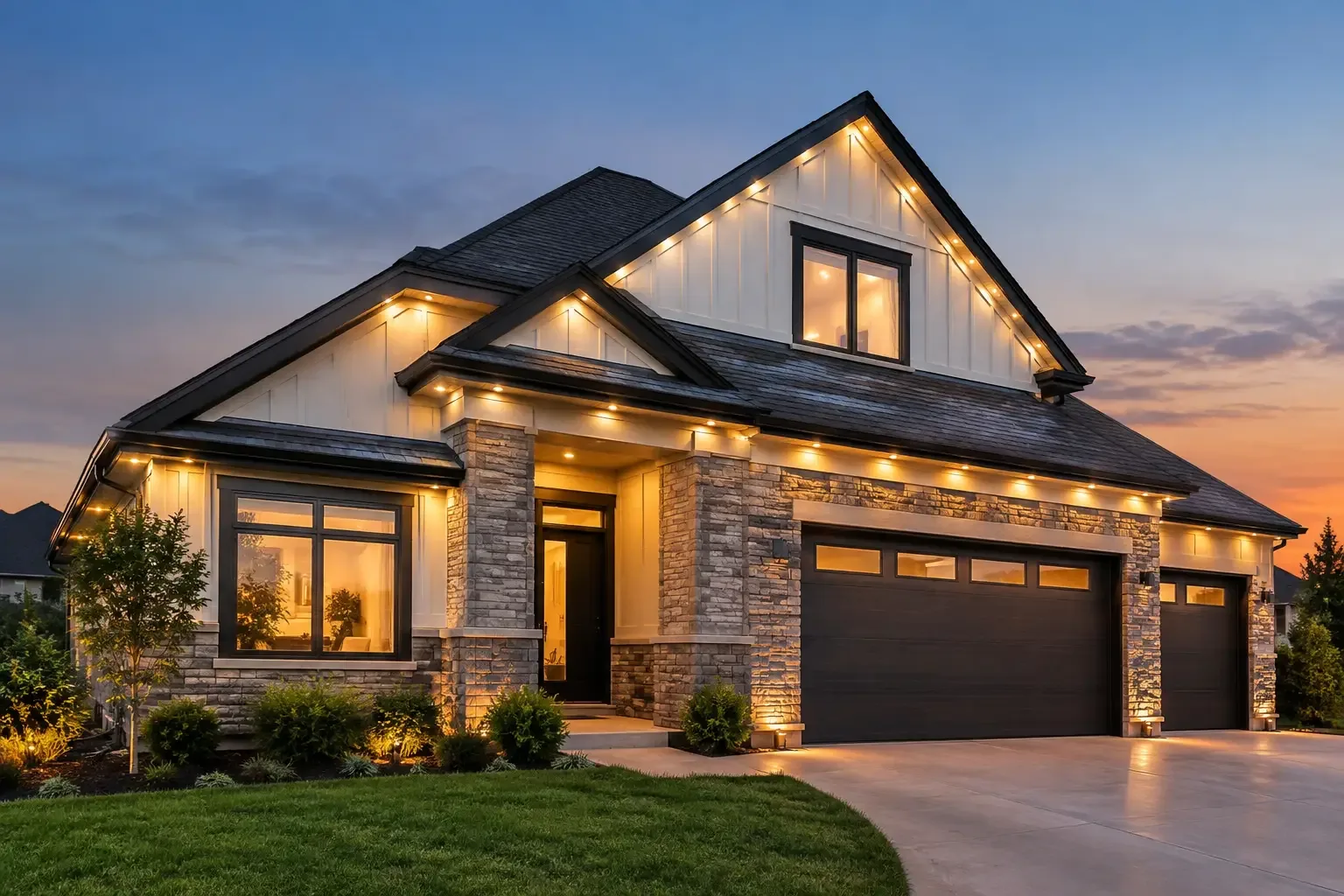
A ladder against the siding, tangled strands on the garage floor, one section that goes dark after the first snow - for many homeowners, holiday lighting has become a chore they enjoy only after it is finished. So, are roofline LEDs worth it? For the right home and homeowner, permanent roofline lighting can replace that annual cycle with a clean architectural feature you can use every night, then transform for any occasion in seconds.
The value is not simply that the lights change color. It is the combination of thoughtful placement, a polished daytime appearance, and control that makes exterior lighting feel like part of the home rather than a seasonal project.
What makes permanent roofline LEDs different?
Temporary holiday lights are designed for a short display window. They are clipped up, plugged in, adjusted, removed, and stored - then often replaced when weather, wear, or a failed strand catches up with them. Permanent roofline LED systems are planned around the architecture of the home. Low-profile tracks are mounted along the roofline or trim, wiring is routed discreetly, and the fixtures remain in place year-round.
When the system is off, the goal is simple: it should not compete with your home’s exterior. A well-planned installation follows clean lines and uses track colors and mounting locations that suit the fascia, soffit, and roofline. During the evening, warm white can create a refined, welcoming outline. For Christmas, Halloween, game day, birthdays, or a neighborhood celebration, the same system can shift to full color.
That distinction matters. A permanent installation is best viewed as an exterior upgrade with a holiday benefit, not as a more expensive version of string lights.
Are roofline LEDs worth it for everyday curb appeal?
They can be, especially on homes with prominent rooflines, front-facing gables, covered entries, or architectural details that disappear after sunset. Soft warm-white lighting gives the home a finished appearance in the evening without requiring every night to look like a holiday display.
The most successful designs use restraint. Brightness should complement the exterior rather than wash it out, and not every roof edge needs lighting. A carefully selected front elevation may look more intentional than a system that traces every possible line. This is where a professional design consultation earns its place: the layout should reflect the proportions of the home, viewing angles from the street, and the way you want it to feel at night.
For homeowners who take pride in a clean exterior, this is often the strongest argument for permanent lighting. You receive more than a few weeks of seasonal color. You gain a simple nightly look that makes arriving home feel better and gives the property a more finished presence after dark.
The real trade-off: upfront cost versus annual effort
Permanent roofline LEDs cost more upfront than buying temporary lights for one season. Pricing varies widely because every property is different. Roofline length, height, access, number of elevations, trim material, controller placement, power availability, and desired zones all affect the scope of work.
The more useful comparison is not permanent lighting versus one box of holiday lights. It is permanent lighting versus years of purchasing strands, clips, timers, replacement bulbs, extension cords, storage bins, and possibly paying for seasonal installation and removal. It also includes the time spent testing lights, climbing ladders, dealing with cold weather, and finding a place to store everything for the other ten or eleven months of the year.
That does not mean permanent lighting is automatically the right financial decision for every household. If you decorate lightly, enjoy installing lights yourself, or expect to move very soon, temporary lighting may remain the practical choice. But if you already invest in professional holiday light installation, or if putting lights up has become more burden than tradition, the long-term convenience can make the investment easier to justify.
Convenience is where the system earns its keep
A permanent system should make lighting easier to enjoy, not create another technology project. App-based control lets you select a scene, adjust brightness, set timers, schedule holiday colors, and turn zones on or off from your phone. You can keep the front roofline warm white on weeknights, use team colors for a watch party, then return to an understated setting without touching a ladder or unplugging anything outside.
Scheduling is particularly useful for busy households. Set lights to come on at dusk, turn off at a preferred time, or run a special scene for a specific evening. The day-to-day experience should feel simple enough that everyone in the household can use it.
Zones add another layer of flexibility. Depending on the design, separate roofline sections can be controlled independently. You might keep the front of the home classic while adding color around a garage gable or side elevation for a celebration. This is not essential for every property, but it can make a larger installation feel more versatile and intentional.
Installation quality determines whether the result looks permanent
The lights themselves matter, but installation is what determines whether the system looks refined or improvised. Track alignment, fixture spacing, corner transitions, concealed wiring, power routing, and controller location all shape the finished result. A rushed layout can leave visible cables, uneven lines, or lighting that feels disconnected from the architecture.
Professional planning also addresses practical details before installation begins. Your installer should evaluate roofline access, trim conditions, available power, drainage considerations, and where the controller can be placed for convenient service and reliable connectivity. A visualizer preview based on your home can help confirm which elevations to light and how warm white or color scenes may look before work starts.
Colorado weather is another reason to prioritize the installation, not just the product. Sun, wind, hail, snow, and temperature swings are part of life along the Front Range. Exterior equipment should be selected and installed for the environment, with attention to secure mounting and protected electrical connections. Ask direct questions about equipment, workmanship coverage, service procedures, and what support looks like if you need help after installation.
When permanent roofline lighting may not be the best fit
Permanent LEDs are not a universal answer. A homeowner who prefers no visible nighttime lighting outside of the holidays may not use the system enough to feel good about the investment. Homes with complex roof access, aging fascia that should be repaired first, or limited electrical options may require additional work that changes the project budget.
Personal style matters, too. Some homeowners want dramatic color every season; others want a nearly invisible system that delivers warm white most nights and color only a few times a year. Both approaches work. The key is choosing a system and layout that supports how you actually live rather than buying the largest display possible.
It is also worth considering your street and surroundings. A bright, highly animated scene may be fun for a party, but a lower-brightness static scene is often a better choice for regular use. Good exterior lighting respects the home, the neighborhood, and the people who live nearby.
How to decide if roofline LEDs are worth it for you
Start with a few honest questions. Do you want to stop hanging and taking down holiday lights? Would warm-white lighting improve how your home looks on ordinary evenings? Will you use color for holidays, celebrations, or family events? And do you care as much about a clean daytime finish as you do about the nighttime effect?
If the answer is yes to most of those questions, permanent roofline lighting deserves serious consideration. Ask for a design that is tailored to your roofline rather than a one-size-fits-all layout. Review where tracks will sit, how wiring will be hidden, where controls will live, and which areas can be independently controlled. A clear proposal should help you understand the scope before making a decision.
At Firefly Exterior Lighting, the goal is not to make every home brighter. It is to create a lighting plan that looks clean by day, feels considered at night, and gives homeowners an easy way to make the moment memorable. The right system should remove an annual headache while giving you a home you are happy to come back to every evening.