
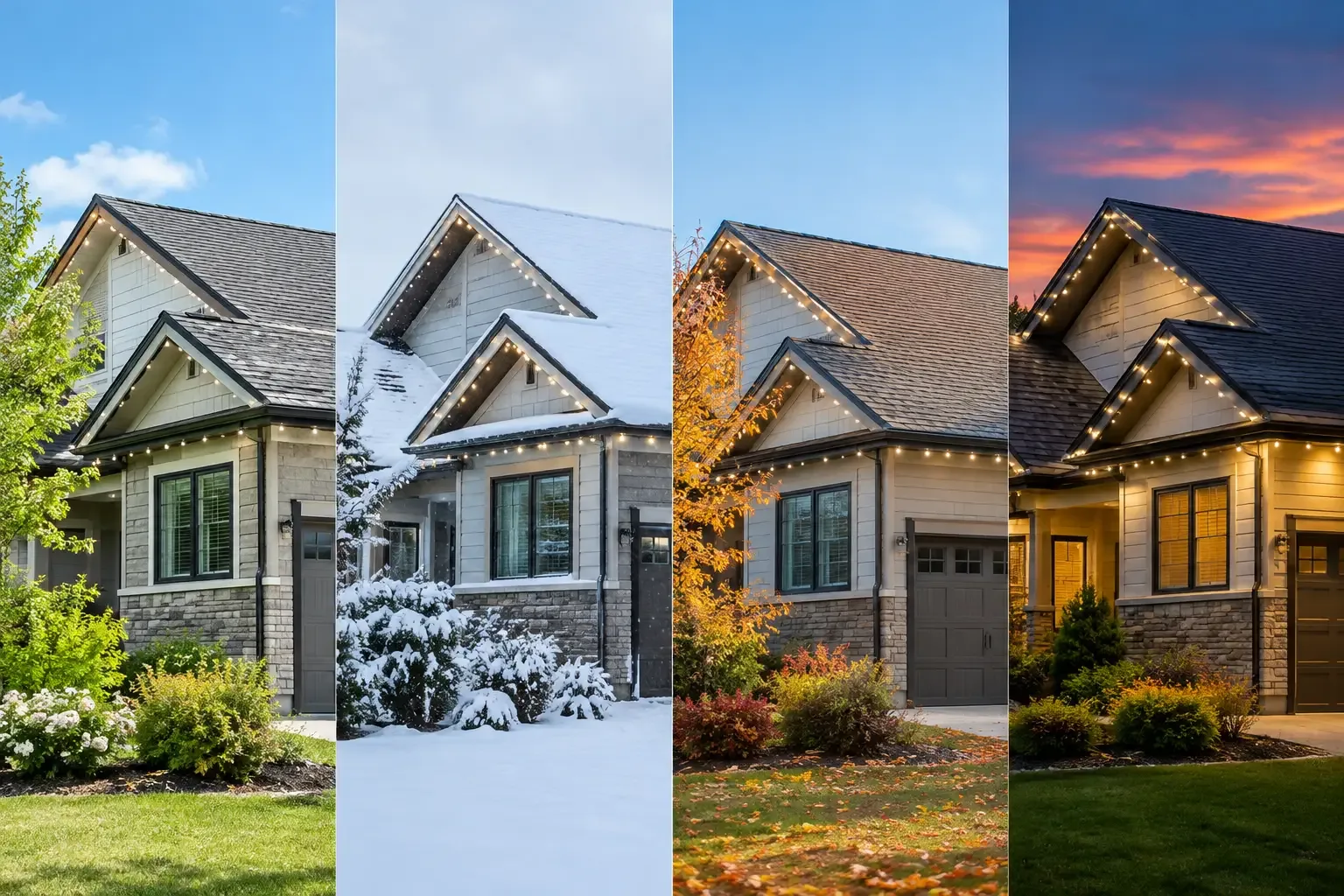
A ladder on an icy driveway is not a holiday tradition most Colorado homeowners want to keep. So, can roofline lights stay installed after the season ends? Yes - when they are purpose-built as a permanent exterior lighting system and professionally planned for your home. The key difference is not simply leaving lights up. It is choosing equipment, placement, wiring, and controls designed to look finished through every season.
Permanent roofline lighting gives your home a clean architectural glow on an ordinary Tuesday, then shifts to full-color scenes for Christmas, Halloween, game day, or a backyard celebration. The system stays in place. What changes is the scene, brightness, schedule, and mood.
Can Roofline Lights Stay Installed in Colorado Weather?
Permanent roofline lights are designed to remain installed year-round, including through changing temperatures, rain, snow, sun exposure, and wind. That does not mean every strand of outdoor lights should be left on a roof indefinitely. Temporary holiday lights and permanent architectural lighting serve different purposes.
Temporary strands are typically installed with clips, extension cords, visible connections, and routes that make sense for a few weeks. They can look great during the holidays, but they are not usually planned around daytime appearance, concealed wiring, or long-term service access. Leaving them up can lead to sagging lines, faded materials, loose clips, and a look that feels unfinished once the decorations come down.
A permanent system is installed with long-term placement in mind. Low-profile lighting track is positioned along the fascia, soffit, or other suitable roofline details so the lights are discreet by day and expressive at night. Wiring routes and controller placement are considered before installation begins, rather than added as an afterthought around doors, downspouts, and outlets.
For Front Range homes, thoughtful planning matters. Intense sun, snow, temperature swings, and roofline geometry all influence how a system should be installed. A professional evaluation helps identify the cleanest path for wiring and the best mounting locations for the specific trim and architectural features of your home.
Permanent Installation Is What Makes the Difference
The question is less about whether lights can stay installed and more about whether the entire system was designed to stay installed. A polished result depends on several details working together: appropriately rated components, secure mounting, protected connections, clean cable management, and a controller location that remains practical to access.
A permanent lighting plan should also account for how the house looks in daylight. The goal is not to make the roofline disappear behind hardware. It is to use a track color and placement that complements the home, keeping the system subtle when it is off. On many homes, visitors will not notice the lighting hardware until the lights come on after dark.
That is one reason roofline lighting is better viewed as a home upgrade than seasonal decor. The system can support a warm-white setting that highlights the structure of the home without making every evening feel like a holiday display. When an occasion calls for more color, it is already there.
What a Professional Roofline Plan Considers
Every home has its own visual priorities. A simple front gable may call for a different approach than a two-story home with dormers, angled returns, covered porches, or multiple roof elevations. Before installation, the plan should consider the visible rooflines, trim condition, power access, and the routes available to conceal wiring.
It should also consider where you want the visual impact. Some homeowners want a refined front elevation for curb appeal. Others want the front, side, patio, and backyard areas coordinated for entertaining. Zoned controls can make those choices more flexible, allowing one area to stay warm white while another runs a celebratory color scene.
At Firefly Exterior Lighting, the planning process is built around the home rather than a one-size-fits-all package. That includes reviewing roofline photos, discussing your goals, and creating a layout that balances nighttime impact with a clean daytime finish.
Everyday Lighting Changes the Year-Round Value
Leaving permanent roofline lights installed does not mean leaving them brightly lit all night. App-based controls let homeowners use lighting with more intention. You can choose a soft warm-white scene for nightly use, reduce brightness for a quieter look, and set timers or schedules so the system operates when it makes sense for your household.
A warm-white setting can define roof peaks and entry areas, making the home feel more welcoming after sunset. It can also add a finished look during long winter evenings, when the home is often seen in the dark before dinner. The right brightness is important here. Architectural lighting should complement the home, not overpower the street.
Then there are the moments when color is the point. With permanent color-capable roofline lighting, you can shift from everyday white to holiday colors without climbing a ladder, untangling cords, or finding storage space for bins of seasonal strands. A red, white, and blue scene can be scheduled for a summer holiday. Orange and purple can appear for Halloween. Team colors, birthday colors, and party scenes can be set from the same app.
The convenience is real, but the flexibility is what makes the system feel personal. You are not committing your house to one permanent look. You are installing a lighting foundation that can adapt to the calendar and your preferences.
What Maintenance Should Homeowners Expect?
Permanent roofline lighting is lower-maintenance than installing and removing temporary lights every year, but it is still an exterior system. A sensible approach is to occasionally inspect the visible roofline from the ground, keep the app and controller settings organized, and contact your installer if you notice a section that is not behaving as expected.
Avoid treating the system like a roof-mounted decoration that needs constant adjustment. If it was installed correctly, there should be no annual ritual of clipping, re-clipping, or re-routing cords. The homeowner experience should be centered on using scenes and schedules, not managing hardware.
If your home receives roof work, exterior painting, gutter replacement, or other service near the installed lighting, let the contractor know the system is in place. It is also wise to coordinate with your lighting installer beforehand when possible. This helps protect the track, wiring, and connections while other work is completed.
A Few Habits That Keep the System Looking Its Best
Use warm white at a restrained brightness for regular evenings, especially if nearby homes are close together. Save high-energy color effects for holidays and celebrations, when that visual statement fits the moment. Review your schedules as seasons change, since sunset times shift considerably between summer and winter.
It also helps to keep your installation information and support details in one easy-to-find place. Should you ever need assistance, knowing where the controller is located and which zones are affected can make troubleshooting more straightforward.
Is Permanent Roofline Lighting Right for Every Home?
Not every roofline needs the same level of coverage. A modest, carefully selected installation can look more refined than trying to outline every possible angle. Homes with distinctive gables, strong front-facing peaks, covered porches, and visible eaves often benefit especially well because the lighting has architectural lines to emphasize.
The condition and accessibility of the trim also matter. If fascia, soffits, gutters, or roofing are due for near-term replacement, it may make sense to complete that work first. A consultation should be candid about those practical considerations rather than treating lighting as separate from the home itself.
Budget is another factor. Permanent lighting costs more upfront than a few boxes of temporary holiday strands, but it replaces the recurring work of purchasing, hanging, removing, storing, and replacing those decorations. For homeowners who value curb appeal and want to stop climbing ladders each year, the long-term convenience can be compelling.
The best permanent roofline lights are the ones you barely notice during the day and genuinely enjoy using at night. If your home has a roofline worth highlighting, a thoughtfully installed system can stay in place through every season while giving you a new reason to look up when you pull into the driveway.