
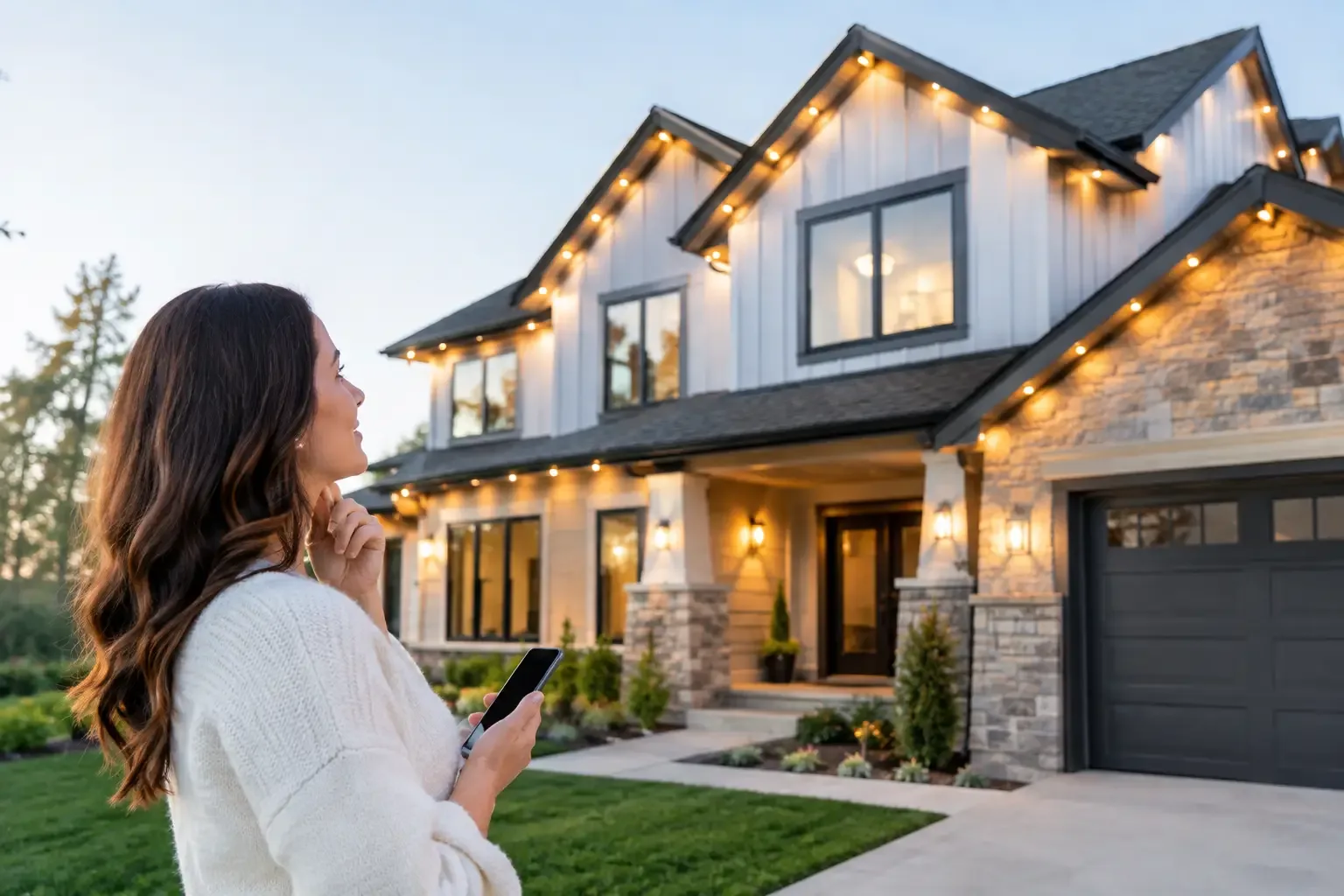
A cleanly lit roofline can change the way your home feels after sunset, whether it is a soft warm-white glow on a Tuesday night or full color for the holidays. But how much do permanent lights cost when they are designed to look intentional, stay discreet by day, and work from an app year-round?
For most professionally installed residential systems, the answer depends less on the size of the house than the length, height, and complexity of the roofline. A straightforward single-story home may fall in a very different range than a multi-gable two-story home with peaks, dormers, patios, and difficult wiring routes. The best estimate is built around your actual home, not a one-size-fits-all package.
How Much Do Permanent Lights Cost?
As a general planning range, professionally installed permanent roofline lighting often costs about $25 to $50 or more per linear foot, depending on the system, installation conditions, and design details. Many homeowners invest roughly $3,000 to $8,000 for a typical project, while larger or more architecturally complex homes can reach $10,000 to $15,000 or more.
Those figures are useful for setting expectations, but they are not a substitute for a project-specific proposal. Two homes with the same square footage can require dramatically different amounts of lighting. A compact home with a long, simple front eave may be easier to light than a larger home with multiple steep roof sections and several stories of elevation.
A professional estimate should account for the complete system: lights, color-matched track, power supplies, controller, wiring, mounting materials, design planning, installation, setup, and homeowner training. That distinction matters when comparing quotes. A lower number may reflect fewer lit areas, a more limited controller, visible wiring, or an installation approach that does not prioritize a clean daytime finish.
What Shapes the Price of Permanent Roofline Lighting?
Linear footage is the starting point
The most direct pricing factor is the number of feet being illuminated. A front-only installation costs less than lighting the front, sides, rear patio, garage, peaks, and upper roofline. Homeowners often begin with the areas that create the strongest curb appeal from the street, then decide whether side and backyard spaces are worth including for entertaining or visibility from neighboring streets.
More footage means more lights, track, wire, labor, and power planning. It also creates more opportunities for zones, allowing different sections of the home to run different colors or brightness levels when desired.
Roofline complexity changes installation time
Clean architecture is rarely as simple as it looks from the sidewalk. Multiple gables, steep pitches, second-story sections, dormers, covered porches, and tight transitions all affect how the system is installed. So do accessibility and safety requirements.
A skilled installer plans track placement to follow the home’s lines, makes transitions look natural, and routes wiring with care. The goal is not simply to get lights on the house. It is to preserve the home’s appearance in daylight, when poor placement and exposed wiring become much more noticeable.
Home height and access matter
A single-story ranch home is usually faster and simpler to access than a tall two-story home with a steep lot or elevated rear roofline. Installation crews may need specialized ladders, lifts, or additional safety measures for higher or harder-to-reach areas.
Colorado homes can also present conditions worth considering, including heavy snow exposure, changing rooflines, and outdoor electrical planning for all seasons. A thoughtful installation accounts for where equipment will live and how the system will be supported over time.
The system and controls influence the investment
Not all permanent lighting systems offer the same experience. The controller, app, light quality, track profile, color options, zone control, scheduling features, and warranty coverage all influence price.
For homeowners who want more than holiday colors, warm-white performance deserves close attention. Architectural lighting should feel polished rather than harsh. You may want a low-brightness warm-white setting for daily curb appeal, a festive preset for December, and custom color scenes for Halloween, game days, birthdays, or a summer gathering. A capable app makes those changes easy without turning your home exterior into another technical project.
Electrical and wiring conditions can add scope
Some homes have a convenient exterior outlet near the ideal controller location. Others require more involved planning to create a discreet, protected power and wiring path. Long roofline runs, detached structures, patios, and separate lighting zones can also change the electrical scope.
This is one reason an address review and roofline photos are so useful early in the process. They help identify likely challenges before the crew arrives and make the final proposal more accurate.
What Is Included in a Professional Installation?
A permanent lighting quote should describe what you are getting beyond the lights themselves. The strongest installations begin with a roofline review and a design that suits the home’s architecture. From there, the installer determines where track will sit, how wiring can remain hidden, where the controller and power components should be placed, and how the system will be configured for convenient daily use.
At Firefly Exterior Lighting, that planning can include a visual preview of your home, so you can see the intended effect before installation begins. Once the system is installed, homeowners are shown how to use scenes, schedules, brightness settings, and zones in the app.
That handoff is part of the value. A permanent system should not leave you searching for instructions when the first holiday arrives. You should be able to choose a look, set a timer, and enjoy the result.
Comparing Permanent Lights With Temporary Holiday Lights
Temporary lights can seem less expensive because the upfront purchase is smaller. Yet the real comparison is not just the cost of a few strands from the store. It includes replacement bulbs and strands, clips, extension cords, storage bins, ladder time, installation help, removal, and the risk of doing it all again next season.
For a home that hires seasonal installers each year, the recurring cost can add up quickly. Permanent lighting is a larger upfront investment, but it replaces the annual cycle with a fixed architectural system that is ready whenever you want it.
There is also a visual trade-off. Temporary displays are often designed for one season and may be more visible during the day. Permanent systems are intended to blend into the roofline, then make an impact after dark. That clean-by-day, unforgettable-by-night difference is central to the decision for many homeowners.
How to Get a More Accurate Estimate
Before requesting a quote, take a few clear photos of the front and visible sides of your home from the street. Include roof peaks, garage lines, covered porches, and any sections you may want lit. It also helps to think about how you will use the system most often.
Do you primarily want refined warm-white lighting every evening? Is Christmas your main priority? Would zones for the front, patio, and upper roofline make the home more useful for entertaining? These choices help define the design without forcing you to become a lighting expert.
When reviewing a proposal, ask whether it includes all equipment, installation, app setup, programming guidance, warranty details, and any electrical work required. Also ask what will be visible in daylight. A proposal should give you confidence in the finished appearance, not only the nighttime color options.
Common Questions About Permanent Lighting Costs
Can permanent lights be installed in phases?
Often, yes. Some homeowners start with the front roofline and garage, then add side elevations, patios, or rear entertaining areas later. Phasing can make the initial investment more comfortable, although completing the full design at once may sometimes be more efficient for access and labor.
Are permanent lights expensive to operate?
Modern LED systems use relatively little energy compared with older holiday lighting. Actual operating cost depends on your local electric rates, brightness, colors, number of lights, and how many hours they run. Schedules and timers help keep usage intentional.
Is financing available?
Many homeowners prefer to discuss financing options alongside the project proposal. Availability and terms vary, so it is worth asking during your consultation rather than assuming every project will have the same options.
The right permanent lighting investment is not the cheapest number per foot. It is the system that respects your home’s architecture, gives you the control you will actually use, and lets you enjoy every season without climbing a ladder again.