
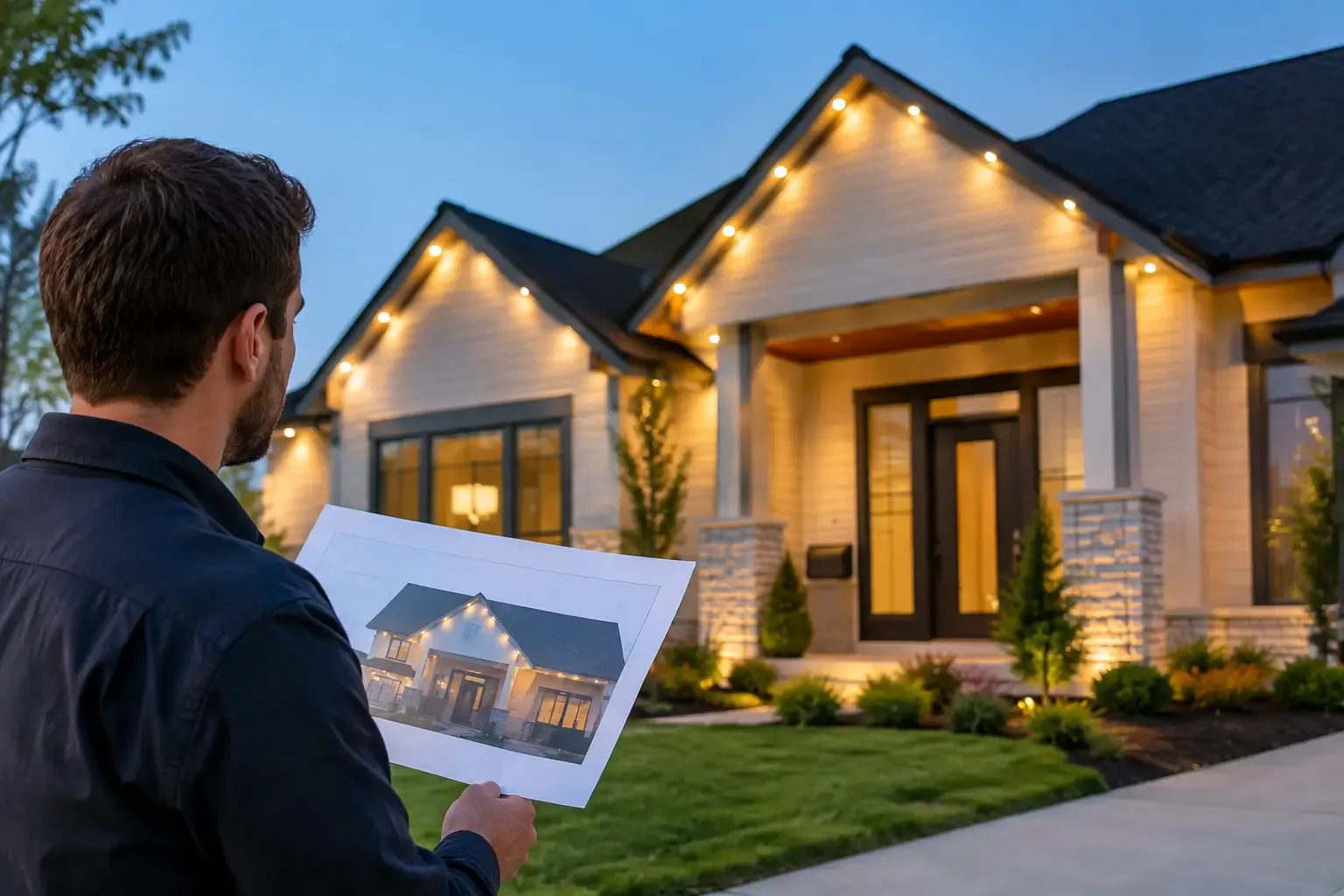
A polished roofline lighting system starts long before the first track is installed. The best designs make a home look quietly refined on an ordinary Tuesday night, then ready for Christmas, Halloween, game day, or a birthday with a few taps in an app. Knowing how to plan roofline lighting means looking beyond how many feet of lights you need. It means considering your home’s architecture, the view from the street, where power can be placed discreetly, and how you want to use the system all year.
For homeowners across Denver and the Colorado Front Range, that planning also needs to account for changing seasons, prominent rooflines, and the desire for a clean finish that does not look like leftover holiday décor in daylight.
Start With the Architectural Lines Worth Highlighting
Walk to the curb at dusk and look at your home as a visitor would. Which edges define its shape? On many homes, the primary front-facing eaves create the strongest visual statement. Gables, garage peaks, entryway returns, and porch rooflines can add depth when they are included with purpose.
More lighting is not always better. A simple ranch home may look its best with a clean run across the front eaves and garage. A two-story home with multiple gables may benefit from lighting those peaks to preserve the home’s symmetry. The goal is to trace the architectural lines that make the house recognizable, not to outline every surface available.
Consider sightlines from the street, driveway, sidewalk, and neighboring approaches. A roofline that is prominent from the street should generally receive priority over a side elevation that is rarely seen. Corner lots are one exception. If your home is visible from two streets, extending the design around a visible side can create a more complete result.
Decide What Should Stay Subtle
Permanent roofline lighting should support the home rather than compete with it. On a highly detailed façade, such as one with stonework, dramatic dormers, or a covered entry, a restrained lighting plan often feels more expensive and intentional than a fully traced outline.
It also helps to think about your preferred nightly setting. Warm white lighting is ideal for everyday curb appeal, but it should frame the house without washing out windows or creating harsh pools of light on the siding. Color scenes can be more expressive because they are used selectively for holidays and events.
Choose Track Placement Before You Choose Effects
The discreet daytime appearance of a permanent system depends largely on placement. Low-profile tracks are typically positioned under the fascia or soffit so the lights project outward and downward while the hardware remains less noticeable from normal viewing angles.
Every roofline is different. Fascia depth, gutter placement, soffit construction, roof pitch, and trim color all affect where a track can sit and how well it will disappear. A good plan evaluates these conditions in person rather than assuming a single placement works on every home.
For example, lights installed too far back under a deep soffit may lose some of their crisp definition from the street. Installed too close to a visible edge, the track may be more apparent during the day. The right position balances light output, viewing angle, and a clean finish.
Color matching matters as well. Tracks and mounting details should complement the home’s trim whenever possible. The objective is simple: clean by day, unforgettable by night.
Map Power, Controllers, and Wiring Routes
A beautiful roofline design can be undermined by visible wires or an inconvenient controller location. Before installation, identify exterior outlets, garage access, utility areas, and protected spaces that could house system components. The controller should be accessible for service and connection, yet placed where it does not become a visual distraction.
Wiring paths deserve the same attention as the visible lighting. On a well-planned installation, wire runs follow concealed or low-visibility routes along trim, soffits, attic spaces, or other appropriate building features. The exact approach depends on the home’s construction and access points.
This is one reason a consultation-led plan is valuable. A roofline may look straightforward from the ground, but a professional site review can reveal obstacles such as interrupted soffits, multiple roof levels, masonry walls, or limited outlet locations. Addressing those details before installation helps avoid compromises later.
Plan for Access Without Planning for Constant Maintenance
Permanent lighting is designed to remove the annual ladder routine, not create a new one. Still, components should be installed with reasonable access in mind. Controllers, connections, and power sources should not require dismantling finished areas or climbing onto the roof for ordinary service needs.
In Colorado, weather exposure is part of the equation. Snow, wind, temperature swings, and intense sun make proper mounting and protected electrical planning especially worthwhile. Your lighting design should be made for the conditions your home experiences, not just for a quick seasonal display.
Build Zones Around How You Will Actually Use the Lights
Zones let you control portions of the roofline independently. They can be useful on homes with a separate garage wing, a prominent entry gable, or a side elevation that does not need to be illuminated every night. Instead of treating the entire system as one long strand, zoning gives you more flexibility over color, brightness, and scheduling.
Think through a few real moments. For nightly use, you may want the front roofline in a soft warm white while the side remains off. For the Fourth of July, you may prefer red, white, and blue across the main façade. For a party, you might use a more energetic color scene on the entire visible roofline.
The right number of zones depends on the home. Too few can limit control. Too many can add complexity without improving the experience. A thoughtful plan creates useful separation while keeping the app easy to manage.
Set Expectations for Brightness and Color
Brightness should fit both the home and its surroundings. A larger home set farther back from the street may need more output than a compact home close to the sidewalk. Nearby streetlights, dark-sky conditions, reflective siding, and the brightness of neighboring homes all influence what looks balanced.
For everyday lighting, warm white should feel architectural rather than theatrical. It can emphasize the roofline and make the home feel welcoming without turning the façade into a spotlight. Holiday and celebration scenes can be brighter or more colorful, but even then, well-spaced points of light usually look more polished than an overly intense glow.
Programmable color gives homeowners room to personalize the system, but it is most effective when the home’s architecture remains the focus. A red-and-green Christmas scene, orange Halloween pattern, or team-color display feels more dramatic when it follows a clean, well-proportioned roofline.
Use a Visual Preview to Test the Design
Before approving a final plan, ask to see how the lighting could look on your actual home. A visualizer preview helps answer practical questions that are hard to picture from a product photo: Should the garage be included? Does the upper gable need its own zone? Would a shorter front-only run look more refined?
A preview is not a substitute for a site evaluation, but it makes the decision process clearer. It also lets you compare understated warm-white lighting with bolder holiday color scenes before committing to the layout.
At Firefly Exterior Lighting, the planning process is built around those home-specific decisions: roofline photos, visual concepts, track placement, hidden wiring routes, and the way you want to control the finished system. The result should feel tailored to your property rather than applied like a generic holiday package.
Think Beyond December
The strongest reason to plan permanent roofline lighting carefully is that it becomes part of your home’s exterior presentation throughout the year. It can welcome guests, mark family celebrations, add character for holidays, and provide a warm evening look without the annual task of hanging and storing temporary strands.
When reviewing a design, ask one final question: would you still love this layout on a quiet night in April? If the answer is yes, you are planning more than holiday lights. You are planning a year-round architectural feature that gives your home a finished look whenever you want it.