
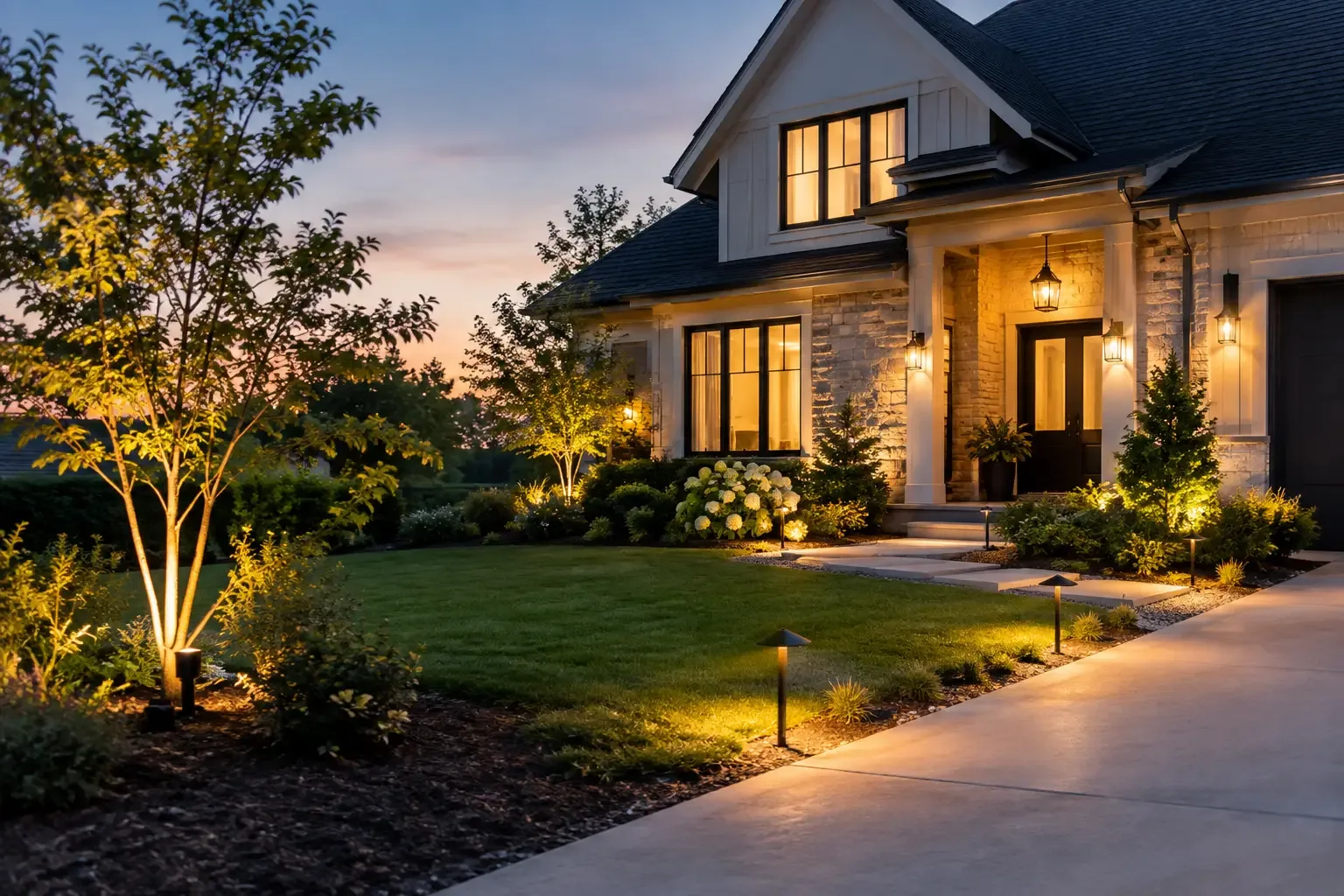
A home can look completely different when the right section of its roofline turns on at the right time. That is the practical value behind outdoor lighting zones explained: instead of treating every light on the house as one switch, you organize your system into intentional areas that can be controlled independently.
For homeowners who want clean, warm-white curb appeal on a Tuesday night and full-color celebration lighting when the occasion calls for it, zones make the system feel personal rather than complicated. The goal is not to add more controls for their own sake. It is to give each part of your home the right level of attention.
Outdoor Lighting Zones Explained on a Real Home
An outdoor lighting zone is a group of lights that operates together. In a permanent roofline lighting system, a zone may cover the front gable, the garage, the main eaves, a side return, or the backyard patio roofline. Within the app, you can assign a color, brightness level, effect, timer, or schedule to that group without changing the rest of the home.
Think of zones as rooms for the outside of your house. You would not always want the porch, driveway, backyard, and front entry to have the same mood or need the same amount of light. The same principle applies to your roofline.
A simple home may work beautifully with two zones: a front-facing zone for nightly architectural lighting and a secondary zone for the garage or side elevation. A larger home with multiple gables, a detached garage, or a covered patio may benefit from several zones. There is no ideal number that fits every property. The right layout depends on roofline shape, viewing angles, how you use the outdoor spaces, and how much independent control you will actually enjoy using.
Why Zones Change the Way Permanent Lighting Feels
The most obvious advantage is flexibility. You can keep the front of the home in a subtle warm white while using color on the patio for a birthday dinner. During the holidays, you can run a classic red and green scene across the street-facing roofline while leaving a quiet side elevation warm white.
Zones also help create a more polished result. When every light runs at full brightness in the same color, a detailed home can lose some of its architectural definition. Separating major roofline sections gives you the option to use contrast thoughtfully. A front gable can be slightly brighter to frame the entry, while the garage line stays softer and supportive.
There is a practical benefit, too. If you only need the front elevation illuminated each evening, there is no reason to run every installed section. With a zoned layout, you can schedule the areas you see and use most often, then activate other areas only when needed.
That said, more zones are not automatically better. A design with too many small zones can make everyday use feel fussy. Most homeowners want easy routines: choose a scene, adjust brightness, set a schedule, and move on with the evening. Good zone planning gives you useful choices without turning your exterior lighting into another system that needs constant management.
Start With How You See and Use the House
The best zone plan begins before installation, with a close look at the property. Stand across the street and notice what the home presents to visitors and neighbors. Then walk the lot. The side yard that is barely visible from the street may matter a great deal if it leads to the backyard gate or outdoor living area.
For many Front Range homes, the front roofline is the natural primary zone. It carries the strongest curb appeal and is usually the section homeowners want scheduled for every evening. From there, the garage, side returns, porch peaks, and patio covers can be grouped based on their visibility and purpose.
Front elevation and entry zones
The front elevation usually deserves the most attention because it establishes the home’s nighttime presence. A single front zone can create a calm, even wash of warm-white architectural light. On more complex homes, separating the main gable from the garage or porch can give you better control over balance.
This is especially useful when the entry sits beneath a prominent peak. You may want that peak to feel welcoming without making the garage line equally bright. Small adjustments like this are what make permanent lighting look designed for the house rather than simply attached to it.
Garage and driveway zones
Garage rooflines are often long, visually dominant, and useful as their own zone. Keeping them separate lets you lower the brightness for nightly use, then bring them into a full-color holiday scene when you want a bigger visual impact.
A detached garage is an even clearer candidate for independent control. It may be visible from the street but not need to run on the same schedule as the house. Separate zoning keeps that choice simple.
Side and backyard zones
Side rooflines may be less visible from the curb, but they can make a difference for homes on corner lots or properties with an active side entrance. Backyard zones are about lifestyle. A covered patio, deck roofline, or outdoor kitchen can have its own scene for dinners, game days, or time with friends, without changing the look of the front of the house.
If a rear section cannot be seen from the spaces where you gather, it may not need elaborate zoning. This is where thoughtful planning matters. The system should support the way you live, not add features you will rarely use.
What Zones Can Control
Once the physical sections are planned and connected to the system, app controls make the design useful day to day. Depending on the installed system and layout, zones can typically be used to manage color, brightness, effects, and timing.
Warm white is often the everyday setting. It complements stone, brick, siding, and trim while giving the roofline a finished appearance after dark. For Christmas, Halloween, the Fourth of July, a favorite team, or a family celebration, the same zone can shift to color in a few taps.
Brightness deserves as much attention as color. A scene that looks exciting for a holiday can feel too intense as an every-night setting. Zoning lets you tune each section to the home’s scale. You might choose a lower brightness level for the front garage line, a medium setting for the main gable, and a brighter festive scene for a special event.
Schedules are where the convenience becomes especially noticeable. A homeowner can set the front elevation to come on around sunset and turn off before bed, while a patio zone follows a later schedule on weekends. Timers also remove the familiar holiday-light routine of remembering to plug in or unplug temporary strands.
Design Decisions That Affect Zone Quality
Zones are planned in the app, but their quality begins with physical installation. Roofline transitions, power locations, controller placement, and concealed wiring paths all influence where a zone can logically begin and end. This is why a quick sketch is useful, but an on-site evaluation is more valuable.
A clean design generally follows the architecture. Natural breaks at gables, corners, garage sections, and patio covers often create intuitive zones. Trying to split a short, uninterrupted roofline into several independently controlled pieces may not improve the result. It can create uneven visual rhythm and add complexity with little payoff.
Daytime appearance matters just as much. The tracks and wiring should be planned to remain discreet against the trim and roofline, so the home looks clean by day and becomes memorable after dark. Zone planning should never compromise that finish.
At Firefly Exterior Lighting, that means reviewing roofline photos, discussing how the homeowner wants to use the home, and creating a plan around the property rather than forcing a standard layout onto it. A visual preview can also help clarify which sections deserve independent control before installation begins.
A Simple Way to Choose Your Zone Plan
Before a consultation, picture three moments: an ordinary weeknight, a major holiday, and a gathering at home. Ask which roofline sections you want illuminated in each case. If your answers change, separate zones may be worthwhile.
For example, a homeowner may want warm white along the main front roofline every night, full color across the front and garage at Christmas, and only the patio roofline active during a backyard dinner. That pattern points to three useful zones. Another homeowner may always want the entire front elevation to match, in which case one well-planned front zone may be the better choice.
It also helps to consider who will manage the app. If you want quick, reliable control for everyone in the household, favor a layout that is easy to understand at a glance. Named zones such as Front Gable, Garage, and Patio are much easier to use than a long list of technical labels.
The Best Zones Feel Effortless
A well-zoned permanent lighting system should not make you think harder about lighting. It should make the home easier to enjoy. You get a refined warm-white look for ordinary evenings, color when there is something to celebrate, and the freedom to light only the areas that suit the moment.
The most successful plan is usually the one that respects the architecture, keeps the daytime finish clean, and gives you just enough control to make the house feel like yours every night.