
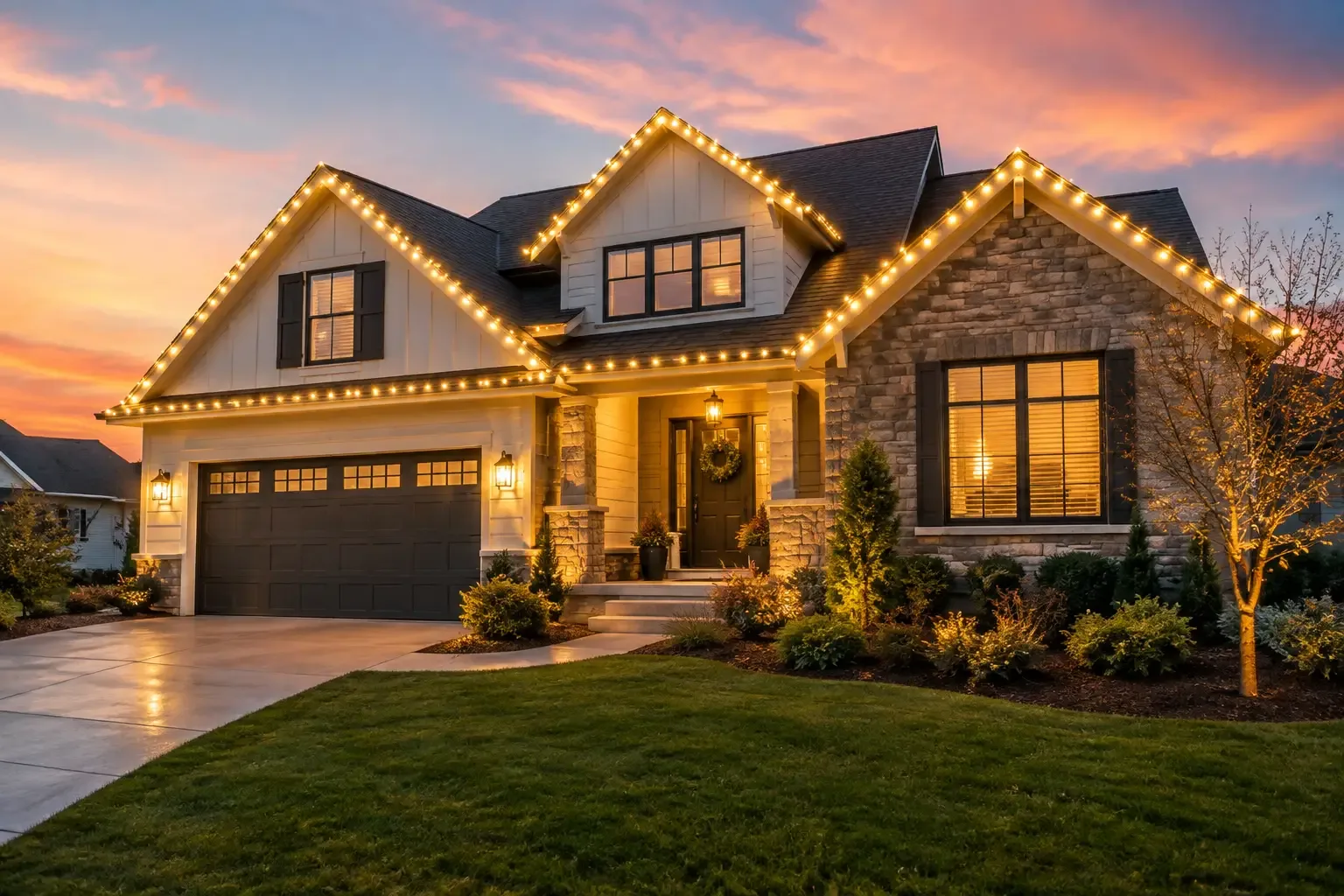
The ladder comes out, a bulb fails, a clip disappears into the snow, and the same holiday-light routine starts all over again. Permanent holiday lights replace that annual project with a refined roofline system that looks clean in daylight, delivers warm-white architectural lighting at night, and shifts to full color whenever the occasion calls for it.
For homeowners who take pride in how their home looks from the street, this is more than a Christmas upgrade. It is a year-round exterior feature designed around the home you already love.
What Permanent Holiday Lights Change
Temporary light strands are built for a short season. They need to be installed, adjusted, maintained, removed, and stored. Even when they look great in December, they can create a frustrating cycle of tangled cords, uneven spacing, burned-out sections, and time on a ladder when the weather is least inviting.
Permanent holiday lights move the work from a seasonal chore to a one-time, professionally planned installation. Low-profile lighting tracks are placed along the roofline or trim, with wiring routed as discreetly as the home allows. During the day, the goal is simple: the system should blend into the architecture instead of calling attention to itself.
At night, the experience changes. A soft warm-white setting can give the house a finished, welcoming look on an ordinary evening. For Christmas, Halloween, the Fourth of July, a playoff game, or a birthday, the same system can display color scenes without anyone climbing onto the roof.
That flexibility matters because most homes are not decorated for just one holiday. A permanent system gives homeowners a practical way to celebrate throughout the year without making the house look like a permanent party venue.
A Clean Look Starts With Roofline Planning
The quality of permanent holiday lights is not only about the fixtures. It comes down to how the system is designed for a specific home.
Every roofline has its own angles, fascia details, peaks, dormers, gutters, and transition points. A thoughtful design considers which lines will create the strongest visual impact, where the lighting track can sit discreetly, and how power and controller placement can remain accessible without becoming an eyesore.
Daytime appearance matters
A permanent system should not compete with the architecture in broad daylight. Track color, placement, wire routing, and the treatment of corners all affect the finished appearance. On many homes, the lights are intentionally subtle from the street until they turn on.
This is one reason a professional installation is different from attaching a product to the roofline on your own. A clean finish requires decisions that are difficult to undo later, especially around trim transitions, visible cable runs, and high or steep roof sections.
The best layout is not always the longest layout
More lighting is not automatically better. A well-chosen primary roofline often creates a polished result, while adding every possible edge can make the display feel busy or increase project cost without a meaningful visual benefit.
The right scope depends on the home, the street view, the desired effect, and the homeowner's budget. A visual preview based on the property can help clarify whether a front-facing roofline is enough or whether side elevations, gables, or additional architectural details should be included.
Warm White for Weeknights, Color for Celebrations
The strongest case for permanent lighting is not that it can produce color. It is that it can also be understated.
Warm-white lighting creates a different kind of curb appeal than a holiday display. It can outline the home with a soft, architectural glow for dinners, guests, evenings on the patio, or simply the satisfaction of pulling into a well-lit home. Brightness can be adjusted so the lighting complements the property rather than overpowering it.
Then, when a celebration arrives, the system can change character in seconds. Homeowners can select classic red and green, orange and purple, team colors, patriotic combinations, or a custom scene for a family event. The most polished displays usually use color intentionally: a coordinated palette, balanced brightness, and a scene that suits the occasion.
Full-color capability is valuable, but restraint still has a place. A home can be unforgettable at night without running every color at maximum brightness.
Control Should Feel Simple
A permanent lighting system earns its place when it is easy to use after installation day. App-based control lets homeowners choose colors, save favorite scenes, set brightness, create schedules, and manage lighting zones from a phone.
Schedules are especially useful for everyday warm-white lighting. Instead of remembering to turn lights on at dusk and off before bed, homeowners can set routines that fit their household. For holiday scenes, a timer helps create a finished look without leaving the display on all night.
Zones add flexibility on larger or more detailed homes. A homeowner may prefer warm white across the main roofline while using color on a front gable for a special event. The exact options depend on the system design, but the goal remains the same: control that feels approachable, not technical.
A good installation handoff should include a walkthrough of the app and controls. You should know how to select scenes, adjust settings, and return to a favorite everyday look before the installer leaves.
What to Consider Before You Install
Permanent holiday lights are a home improvement, so a few practical questions deserve attention before work begins.
First, consider the condition and accessibility of the roofline and trim. Installation is an opportunity to identify the best mounting path, but it is not a substitute for addressing damaged fascia, loose gutters, or other exterior issues. If a roof replacement is already planned soon, timing the lighting project around that work may be the smarter choice.
Second, think about how you want the home to look most nights. Some homeowners want a subtle warm-white outline year-round. Others primarily want holiday and event lighting. Both are valid, but that preference should influence the design, controller location, and level of customization discussed during the estimate.
Finally, focus on the complete project rather than just a per-foot number. Equipment, roof complexity, track placement, wiring routes, access, number of zones, and the amount of roofline all affect the final scope. A clear proposal should explain what is included and leave room to discuss options such as financing, warranty terms, and future additions.
From Consultation to the First Night On
The process should feel organized from the start. A consultation typically begins with the home's address, roofline photos, and a conversation about the look you want. A design team can then evaluate the visible elevations, identify discreet routing options, and create a visual concept that makes the proposal easier to understand.
On installation day, the crew installs the track, lights, wiring, power connections, and controller according to the approved plan. The work is not simply about getting lights onto the house. It is about keeping lines straight, corners clean, components protected, and the finished system visually consistent.
Firefly Exterior Lighting approaches permanent lighting as a tailored roofline upgrade, with design and installation choices made around each home's architecture. Once the system is connected, homeowners receive guidance on using scenes, schedules, brightness settings, and zones.
Common Questions About Permanent Holiday Lights
Will the lights be visible during the day?
A properly planned system is designed to be low-profile. Visibility varies by roofline, trim color, viewing distance, and installation location, but discreet track placement is central to achieving a clean daytime appearance.
Can I use them all year?
Yes. Many homeowners use warm white regularly for curb appeal and reserve color for holidays, sporting events, parties, and personal celebrations. You decide how often the system is used and how bold the display becomes.
Do permanent lights work well in Colorado weather?
A professional consultation should account for local conditions, roofline access, and equipment placement. Colorado homes experience sun, snow, wind, and temperature shifts, which makes thoughtful installation and protected wiring paths especially worthwhile.
Are permanent lights right for every house?
Not necessarily. Homes with limited visible roofline, upcoming exterior renovations, or architectural conditions that restrict clean installation may need a different approach. The best answer comes from reviewing the property rather than making assumptions from a generic price or product photo.
Permanent holiday lights are at their best when they make the home easier to enjoy, not harder to manage. Choose a design that looks quiet and intentional by day, then gives you exactly the right amount of light, color, and celebration when night arrives.