
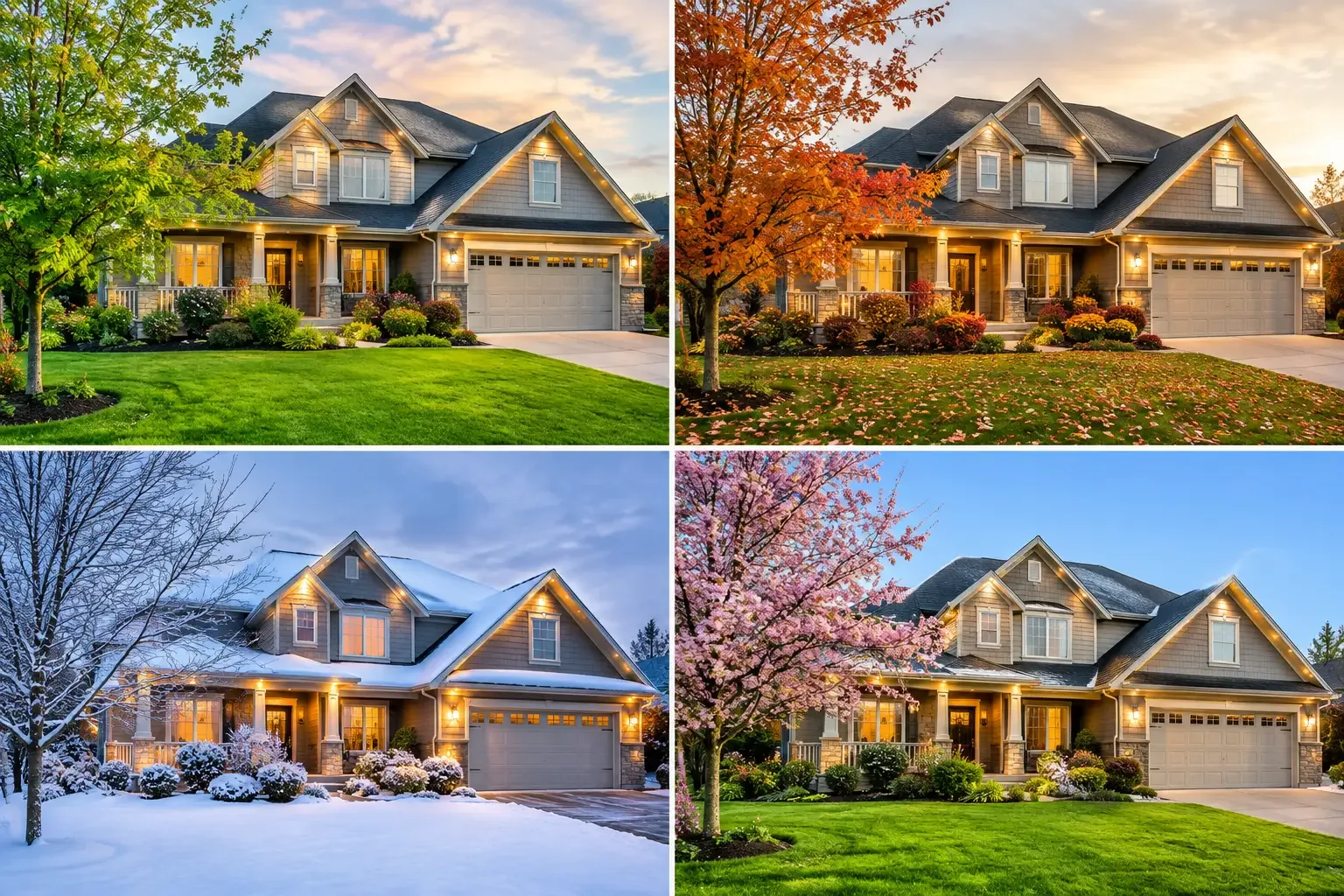
A well-lit roofline changes how a home feels after sunset. Instead of disappearing into the block, your architecture has definition, warmth, and a finished presence. Permanent outdoor lighting makes that effect available every night, then gives you color and personality whenever the calendar calls for it.
For homeowners across Denver and the Colorado Front Range, the appeal is practical as much as visual: no ladders in cold weather, no tangled strands in storage bins, and no annual weekend spent replacing burned-out holiday lights. The right system should look intentional on an ordinary Tuesday in July and memorable on Christmas Eve.
What Permanent Outdoor Lighting Is Designed to Do
Permanent roofline lighting is a professionally installed system of low-profile LED lights mounted in discreet tracks along a home's eaves, fascia, peaks, and selected architectural features. The track is planned to blend with the roofline, while wiring and control equipment are routed as cleanly as the home allows.
The result is not simply a strand of holiday lights left up all year. It is an exterior feature with two distinct modes. Warm white settings can create a restrained, architectural look for nightly curb appeal. Full-color programming gives homeowners the freedom to mark holidays, game days, birthdays, graduations, and neighborhood gatherings without climbing a ladder.
That distinction matters. A system installed only for maximum brightness and color can feel out of place the rest of the year. Thoughtful permanent lighting is designed first around the lines of the house, then around the many occasions you want to celebrate.
Clean by Day Starts With the Installation Plan
Daytime appearance is often the first question homeowners ask, and it should be. The lights may be the exciting part of the project, but track color, mounting position, wire routing, and controller placement determine whether the finished work looks polished from the street.
A professional planning process begins with the roofline itself. Gables, dormers, porch lines, garage peaks, gutters, trim color, outlet access, and landscaping all affect the design. A straight ranch-style roofline may call for a simple, continuous layout. A home with multiple peaks and elevations may benefit from distinct sections that can be controlled independently.
Track is typically selected to complement the fascia or soffit so it recedes rather than competes with the exterior. The goal is not to make the equipment disappear through wishful thinking. Up close, a permanent system is still a physical installation. From normal viewing distance, though, clean placement and color-matched components can keep attention on the home rather than the hardware.
Wiring deserves the same consideration. Exposed runs, loose cable, and poorly chosen controller locations can undermine an otherwise attractive design. During a consultation, ask how power will be supplied, where the controller will live, which lines will be visible, and how transitions between roof sections will be handled. Clear answers are a good sign that the project is being designed rather than simply attached to the house.
Warm White for the Week, Color for the Occasion
The most useful permanent lighting systems do not force you to choose between subtle and celebratory. They make both easy.
For daily use, warm white lighting can frame the roofline with a soft glow that complements porch lights, landscape lighting, and interior window light. Brightness should be adjustable. A quiet weeknight setting may look best at a lower level, while a darker lot or a special event may call for more presence. The right setting depends on your façade color, street lighting, viewing distance, and personal preference.
Color scenes are where the system becomes more playful. Red, white, and blue can be scheduled for patriotic holidays. Orange and purple fit Halloween. Team colors can be used for a watch party, while a birthday scene can make a home feel like part of the celebration before guests reach the front door.
Restraint still has a place here. A crisp two-color pattern often reads more refined than a fast-moving, high-brightness animation. There is nothing wrong with a bold party scene, but having a range of options means the house can match the moment instead of overwhelming it.
App Control Should Feel Simple, Not Technical
A phone app is valuable because it removes friction. You should be able to choose a saved scene, adjust brightness, set a schedule, and turn sections of the home on or off without standing outside or managing separate timers.
Zones are especially useful on larger or more detailed homes. You may want the front roofline on for nightly use while leaving a side elevation off. For a holiday display, you may want every visible section active. Separating zones gives you that flexibility and can help create a more balanced composition.
Schedules turn a visual upgrade into a convenient habit. Set warm white lights to come on near sunset and turn off at a reasonable hour. Build a holiday scene that runs only during the evenings you want it displayed. Timers are not just about saving effort. They also help your lighting feel consistent when travel, work, or busy family schedules get in the way.
Before installation is complete, homeowners should receive a walkthrough of the app and their system. That includes how to select scenes, adjust individual zones, create schedules, and recover from a common connectivity issue. The technology should serve the home, not create another device that feels difficult to manage.
What Affects the Scope of a Permanent Lighting Project
There is no responsible one-size-fits-all price for permanent exterior lighting. The total scope depends on the linear footage being lit, the complexity and height of the roofline, access conditions, the number of zones, equipment requirements, and the installation details needed to keep the result clean.
A single-story home with a straightforward front elevation is a different project from a multi-level property with steep pitches, several gables, and extensive side visibility. More lighting is not automatically better, either. Some homes look strongest when the design focuses on the front-facing architecture. Others benefit from wrapping visible returns or highlighting a covered patio.
A quality proposal should make the planned coverage clear. It should also explain what is included in installation, how the system will be controlled, what support is available, and which warranty terms apply to the equipment and labor. If financing is part of your decision, discuss that before scheduling so you understand the available options and terms.
Questions to Ask Before You Commit
A few direct questions can help you compare permanent lighting providers on more than color options. Ask whether the installer will evaluate your actual roofline, provide a visual preview or design concept, and explain where the track, wiring, and controller will be placed. Ask how weather exposure and service needs are addressed. Finally, ask what happens after installation if you need help with settings or have a system concern.
It is also worth discussing your intended use honestly. If you primarily want warm white architectural lighting, say so. If Christmas is the main motivation but you want the freedom to use the system for every holiday, share that too. A good design reflects how you will actually use the home, not a generic lighting pattern.
For Colorado homeowners, seasonal weather is another practical consideration. Professional installation can reduce the need to handle roofline lighting in snow, wind, and freezing temperatures year after year. It does not eliminate the value of inspecting your exterior occasionally or following the provider's care guidance, but it can remove the annual installation cycle that makes temporary lights feel like a chore.
A Better Way to Mark the Moments That Matter
The best permanent outdoor lighting earns its place long after the first holiday display. It makes pulling into the driveway feel different. It gives a well-kept home a warm evening presence. And when a celebration arrives, the house is ready in a few taps instead of a full day on a ladder.
Firefly Exterior Lighting approaches that process as a design-and-install project, with planning around your roofline, a clean finish, and app controls that fit everyday life. Start with the way you want your home to look on a normal night, then build in all the color and celebration you want from there.