
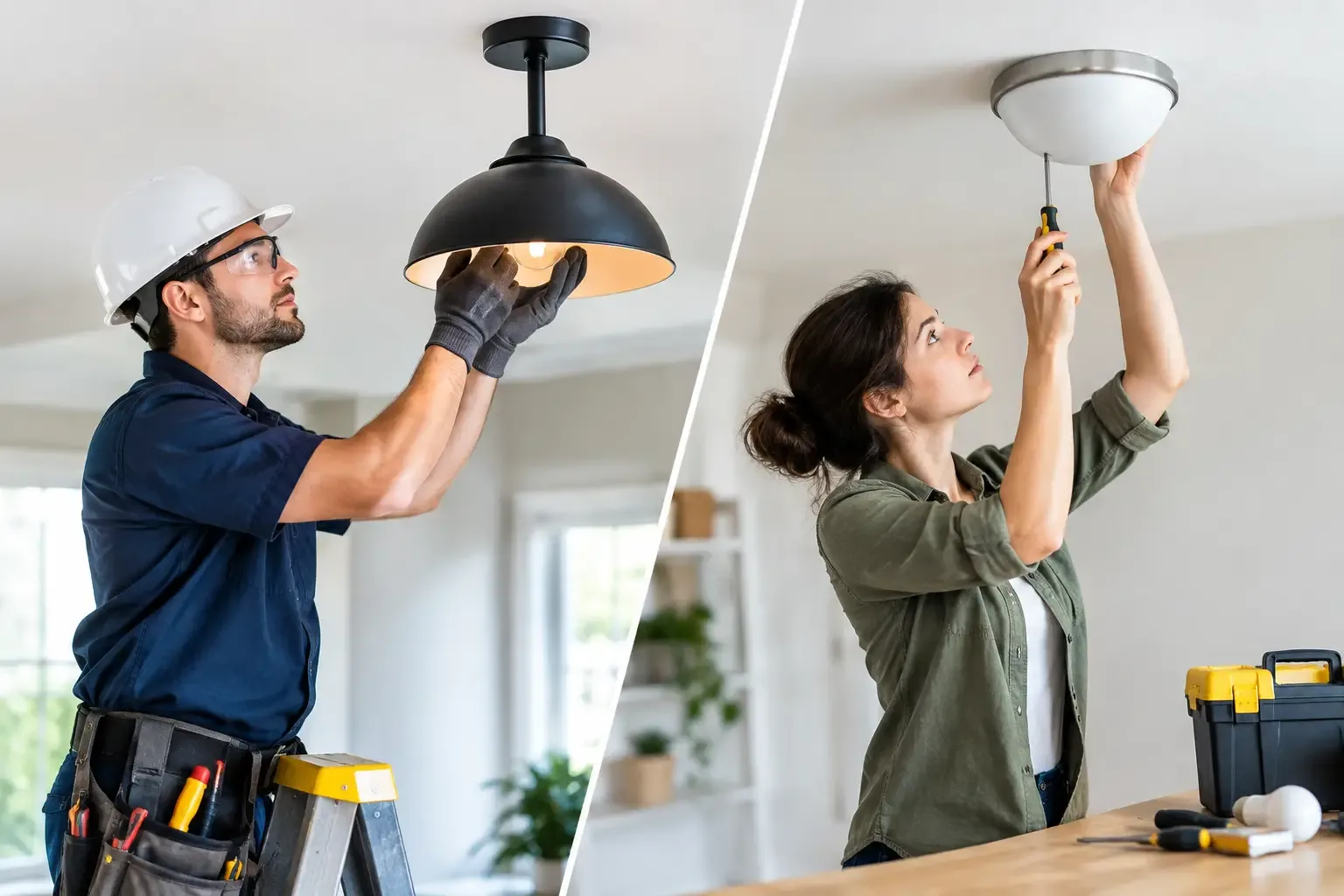
A permanent lighting system should make your home look considered at 7 p.m., not look like a weekend project at 7 a.m. That is the real distinction in professional lighting vs DIY installation: both can put color along a roofline, but the planning, finish, reliability, and day-to-day experience can be very different.
For homeowners who want warm white light for ordinary evenings and full color for holidays, game days, and celebrations, the decision is not simply about who attaches the lights. It is about whether the finished system fits the home, stays discreet in daylight, and remains easy to use long after installation day.
Professional Lighting vs DIY Installation: What Changes
DIY permanent lighting kits have made exterior lighting more accessible. For a simple, low roofline and a homeowner who is comfortable measuring, climbing ladders, routing low-voltage wiring, and troubleshooting an app, a self-installed system can be a reasonable project. The upfront equipment cost may be lower, and doing the work yourself offers a sense of control.
But rooflines are rarely as simple as a product photo suggests. Gables, dormers, multiple levels, stone or brick surfaces, gutters, soffits, and existing electrical access all affect the plan. A system that looks clean from the driveway usually depends on decisions made before the first track is cut or the first fastener is placed.
Professional installation shifts the work from assembling components to designing an integrated exterior feature. The installer evaluates the roofline, identifies mounting surfaces, maps wire paths, considers controller placement, and plans how zones will function in the app. The goal is not just light output. It is a clean by day, unforgettable by night result that feels native to the house.
The Difference Starts With Roofline Design
Permanent lights are visible at night because they are meant to be. During the day, the ideal installation is far less noticeable. That balance requires careful track placement, color matching where appropriate, straight runs, clean corners, and wiring that does not distract from the home’s architecture.
DIY design often happens one section at a time
A homeowner installing a kit may make smart choices along the way, but the plan often develops while standing on a ladder. That can lead to uneven spacing, visible gaps at corners, awkward transitions between roof sections, or extra wire loops where a run did not land as expected. None of these issues necessarily prevent the system from working, but they can change how polished the home looks from the street.
This matters especially on homes with prominent front-facing gables or long, visible rooflines. Small inconsistencies become easier to see when the lights are on every evening.
Professional planning considers the full elevation
A professional plan looks at the home as a whole. Which rooflines should be illuminated? Where will a transition look natural? Which areas should remain unlit to preserve visual balance? How can the wiring travel discreetly from section to section?
At Firefly Exterior Lighting, planning can include reviewing roofline photos and creating a visualizer preview so homeowners can see the general effect before work begins. That is valuable because permanent lighting is an architectural upgrade, not a strand that comes down in January. A thoughtful plan helps ensure everyday warm white scenes feel refined, while holiday colors still have the impact homeowners expect.
Safety Is More Than Being Comfortable on a Ladder
Many DIY installers are capable and careful. Even so, exterior lighting work combines height, tools, weather exposure, electrical connections, and precise mounting. The risk changes substantially on two-story homes, steep roof pitches, icy conditions, or areas with limited ladder footing.
Colorado homeowners know that a clear fall afternoon can turn into a windy, cold evening quickly. Installing under those conditions is not ideal, especially when the project requires repeated trips up and down a ladder while handling tracks, wires, and tools.
A professional crew is equipped for this type of work and follows an installation process rather than improvising around the home’s obstacles. They also have experience recognizing when a proposed route, mounting point, or power location needs to be adjusted. That does not mean every home has the same installation needs. It means those needs are assessed before they become a problem halfway through the project.
Wiring and Power Are Where DIY Projects Get Complicated
The lights may be the visible part of the system, but the wiring and controls determine whether the system feels effortless. Permanent lighting needs thoughtfully routed cable, protected connections, an accessible controller location, and a dependable power strategy suited to the property.
A DIY installation can become frustrating when cable lengths, extensions, corners, and power injection needs are discovered after tracks are already mounted. Homeowners may also find that the nearest outlet is not the best location for a controller, or that a visible wiring route is the only remaining option without revisiting earlier work.
With professional installation, wiring paths are part of the design conversation. The team can identify ways to keep cable runs discreet, place controls where they can be reached if service is needed, and organize the layout around the home’s architecture. If an electrical modification is needed, the right approach depends on the scope of the project and local requirements.
That advance planning supports a better ownership experience. You should be opening an app to set a schedule, not tracing a wire path to figure out why one section is behaving differently.
App Control Is Better When Zones Make Sense
Most permanent lighting systems offer phone control, colors, brightness adjustments, timers, and preset scenes. Those features are compelling, but they only become useful when the system is organized around how you will actually use it.
A single continuous roofline may work well as one zone. A larger home might benefit from separate front, side, upper, or accent zones. With a thoughtful zone plan, you can run subtle warm white lighting on most of the home while adding a little color around an entry or setting a full holiday scene across the roofline.
A professional handoff should include more than a quick confirmation that the lights turn on. Homeowners benefit from being shown how to select scenes, adjust brightness, use zones, create schedules, and make seasonal changes without technical guesswork. The app should feel like a convenience, not another system that needs a manual every time a holiday arrives.
Long-Term Maintenance Favors a Clean Install
Neither professional nor DIY equipment is entirely maintenance-free. Exterior systems face sun, snow, temperature swings, wind, moisture, and the occasional surprise from landscaping or home repairs. The difference is how easy the system is to inspect, understand, and support when something needs attention.
Clean routing and accessible control components make future service simpler. So does knowing how the system was designed and where each run begins and ends. A professionally installed system may also include workmanship coverage or manufacturer warranty support, though homeowners should always review the specific terms in their proposal rather than assume every component is covered in the same way.
For DIY systems, the homeowner is typically the installer, troubleshooter, and service contact. That can be perfectly acceptable for someone who enjoys the work and has the time to manage it. For many busy households, however, the appeal of permanent lighting is removing a recurring task, not replacing annual ladder work with occasional diagnostic work.
When DIY May Be the Right Choice
DIY is not automatically the wrong choice. It can fit a homeowner with a one-story home, a straightforward eave, experience with exterior projects, and realistic expectations about the finish. It may also make sense for a smaller area where a highly customized design is not necessary.
The trade-off is time and responsibility. Measure twice, plan the controller and wire route before ordering or mounting, and be honest about whether you want to spend a weekend installing and potentially refining the system. Saving on labor can be worthwhile when the project is simple and the work itself is part of the appeal.
When Professional Installation Is Worth It
Professional lighting is often the better fit for homes with complex rooflines, elevated sections, multiple architectural materials, or a strong need for a discreet daytime appearance. It also suits homeowners who want a tailored look without managing product selection, layout decisions, mounting details, and setup on their own.
The value is not only in avoiding the ladder. It is in having a system designed around your house and your routines: soft white for a normal Tuesday evening, team colors for a watch party, red-white-and-blue for a summer holiday, and a Christmas scene ready on a timer without unpacking a single storage bin.
Before choosing either path, stand across the street and look at your home the way neighbors and guests do. The best permanent lighting choice is the one that respects that view in daylight, gives you confidence after dark, and leaves your weekends for enjoying the home rather than working on it.