
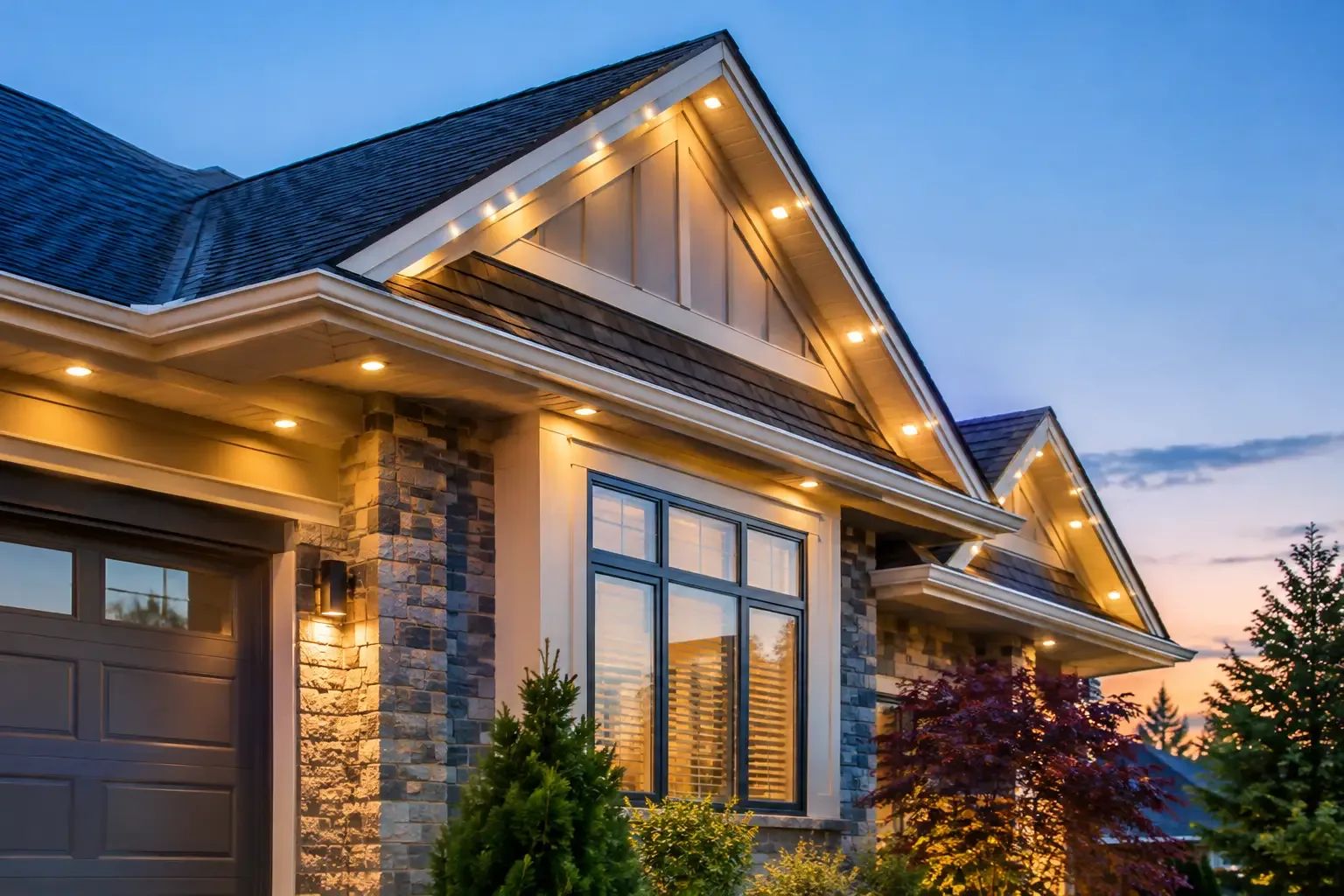
The ladder, tangled strands, burned-out bulbs, and one cold weekend lost to holiday setup are familiar frustrations for many homeowners. A permanent system changes that routine, but the best results come from treating lighting as part of your home’s architecture, not as a row of seasonal decorations. This residential roofline lighting guide explains what to consider before choosing a system that looks clean by day and memorable by night.
Start With the Look You Want Every Night
Holiday color is often what first catches a homeowner’s attention. Yet the most valuable question is usually, “How should my home look on an ordinary Tuesday in March?” A thoughtfully planned roofline system can provide a soft, warm-white outline that complements the home’s exterior rather than overpowering it.
Warm white works especially well for nightly curb appeal, welcoming guests, and making a home feel finished after sunset. It can highlight gables, peaks, dormers, and front-entry rooflines with a controlled architectural glow. Then, when the occasion calls for it, the same system can shift to full color for Christmas, Halloween, game day, birthdays, or a neighborhood gathering.
This balance matters. A system designed only for high-intensity color may feel too busy for regular use. One designed only for subtle white may not deliver the celebratory flexibility that makes permanent lighting so appealing. The right plan gives you both, with brightness and scenes adjusted to suit the moment.
A Residential Roofline Lighting Guide Begins With Placement
The lighting itself is only part of the finished appearance. Track placement, wire routing, roofline transitions, and controller location determine whether the installation looks intentional or improvised.
For many homes, low-profile track is installed beneath the fascia or along a discreet trim edge. This lets the fixtures cast light outward while keeping the hardware far less visible from the street during daylight. The ideal placement depends on the roof structure, trim color, soffit depth, gutter layout, and viewing angles from the sidewalk and driveway.
A visible front gable may deserve more attention than a short side return. A steep roofline can create dramatic definition, while a ranch-style home may benefit from a more continuous, understated outline. There is no universal layout that flatters every property. A tailored design should prioritize the areas that shape your home’s street-facing character.
Clean wiring is part of the design
Permanent lighting should not leave cords draped across siding or connections exposed where they become visual clutter. Professional planning identifies practical routes for wiring, power, and controls before installation begins. The goal is simple: the home should look polished in daylight, not like it is waiting for the next holiday.
Controller placement also deserves attention. It needs to be accessible for service while remaining protected and discreet. During a consultation, it is worth discussing where power is available, how wiring can travel between roofline sections, and whether different areas of the home should be controlled as separate zones.
Choose Control That Fits Real Life
The strongest argument for permanent roofline lighting is not just that it stays up. It is that using it becomes easy enough to enjoy throughout the year.
App-based controls allow homeowners to select colors, save scenes, adjust brightness, set timers, and create schedules without handling individual strands. For example, you might schedule warm white to come on at dusk each evening, switch to orange and purple for Halloween week, and return to an everyday scene automatically afterward.
Zones add another layer of flexibility. The front roofline, garage peaks, and patio-facing section can be grouped or adjusted independently, depending on the system design. That can be useful when you want a refined warm-white presentation from the street while adding more color to a backyard celebration.
Convenience should not mean complication. If a system takes too many steps to operate, homeowners tend to use only a few basic settings. Ask how scenes are created, whether schedules can be repeated, how brightness is adjusted, and what training is included after installation. A good setup should feel intuitive from the first evening.
Plan for Brightness, Color, and Your Neighborhood
More brightness is not always better. Roofline lighting is highly visible, particularly on homes with open sightlines or elevated lots. The goal is to create definition and atmosphere, not glare for your neighbors or a harsh reflection on light-colored siding.
Warm white should feel comfortable at the distance where most people see your home: from the street, sidewalk, or across the cul-de-sac. Color scenes can be more playful, but they still benefit from thoughtful intensity. A red, white, and blue pattern at moderate brightness often looks more refined than an overly bright display that competes with the home itself.
It also helps to consider local expectations. Some homeowners associations have rules about exterior lighting, holiday displays, operating hours, or color use. A permanent system can often be scheduled responsibly, but reviewing applicable guidelines before installation prevents surprises later.
Know What a Professional Installation Should Include
Permanent lighting is a home upgrade, not a box of lights and a free Saturday. The best installation experience begins with a review of the home’s roofline and ends with a homeowner who knows how to use the system confidently.
A complete process typically includes an exterior evaluation, a proposed lighting layout, and an estimate based on the actual property. Roofline photos and visual previews can be useful because they help homeowners see where lighting may run before committing to the project. They also create a better conversation about priorities, such as emphasizing a main gable, carrying lights around a garage, or keeping the design focused only on the front elevation.
Installation day should include fitting the track carefully, routing wiring cleanly, connecting the controller, testing the system, and reviewing app controls. Ask about workmanship coverage, product warranty terms, service support, and what happens if you need help with settings later. The answers may vary by system and installer, so clear details matter more than broad promises.
Questions worth asking before you commit
Before approving a proposal, make sure you understand how the system will look during the day, where the controller will sit, how wiring will be concealed, and which roofline sections are included. You should also ask whether zones are available, how schedules work, and what support is provided after installation.
If financing is part of your decision, discuss the available options and terms directly. A permanent system can replace years of temporary-light purchases and annual setup, but each household should evaluate the investment based on its own priorities and budget.
Design for More Than December
The practical appeal is easy to understand: no more climbing a ladder to hang temporary lights, searching for failed bulbs, or finding storage space for bins of tangled strands. The more personal benefit is seeing your home look cared for year-round.
Use warm white to add a quiet finishing touch to everyday evenings. Save a favorite team-color scene for game day. Set a birthday message in color, create a patriotic look for summer holidays, or give Halloween a little more personality without covering the yard in cords and plastic decorations.
That flexibility is why permanent lighting is different from a one-season display. It can be reserved when you want restraint and ready when you want celebration. Firefly Exterior Lighting approaches that balance through custom roofline planning, discreet installation, and homeowner-friendly control.
The Best First Step Is an Honest Look at Your Home
Stand across the street at dusk and notice what defines your home: the peak above the entry, the garage line, the long horizontal fascia, or the roof edges that disappear after sunset. Those details will guide a better lighting plan than a generic package ever could.
Choose a design that respects the architecture, keeps daytime finishes clean, and gives you control over every occasion. When the system is planned around the way you actually live, the reward is not simply fewer holiday chores. It is a home that is ready to look welcoming whenever you decide the evening deserves a little more light.