
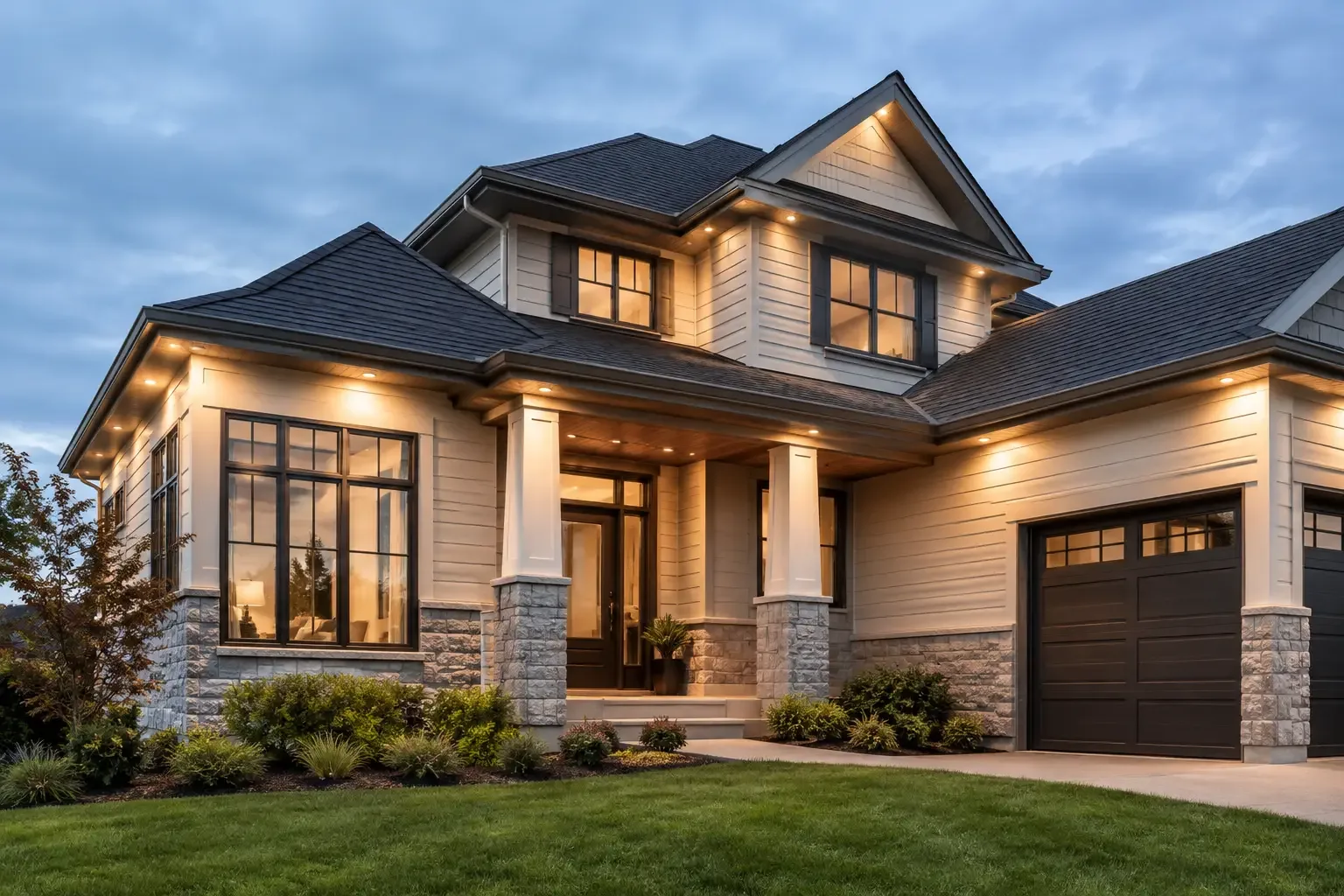
A home can look finished at night without looking decorated. That is the appeal of year round house lighting: a clean, warm-white outline that adds presence to your roofline on an ordinary Tuesday, then shifts to full color when the calendar or occasion calls for it. No tangled strands in the garage. No weekend on a ladder in cold weather. No compromise between refined curb appeal and a little personality.
For homeowners across Denver and the Colorado Front Range, permanent exterior lighting is increasingly less about Christmas alone and more about making a visible roofline work harder all year. The right system should disappear into the architecture by day and make the home feel considered after dark.
What Year Round House Lighting Should Look Like
The difference between a polished installation and a temporary-light look starts with restraint. Permanent lighting is not meant to make every evening feel like a holiday display. For most nights, warm white is the foundation. It can softly define gables, peaks, eaves, and entry-facing rooflines without overpowering the home, nearby landscaping, or the street.
Color is where the system becomes more personal. A homeowner may use a subtle red, white, and blue scene for a summer holiday, school colors on game day, orange and purple for Halloween, or a full Christmas sequence in December. The flexibility matters, but the architecture should still lead. A thoughtful lighting plan follows the lines worth highlighting rather than adding brightness everywhere simply because it is available.
That balance is especially important on homes with prominent front elevations. Stone, brick, stucco, siding, and dark trim all respond differently to light. Roof pitches, dormers, covered porches, and multiple levels also affect where lighting will look balanced. A design that feels understated on a simple ranch home may need a more selective approach on a larger two-story property with several gables.
Clean by Day Starts With the Installation Plan
Permanent lighting earns its name because it stays in place. That makes daytime appearance just as important as nighttime performance. Low-profile track is typically placed beneath the fascia or along a discreet trim line so the system reads as part of the home rather than as a visible string of bulbs.
Placement is not one-size-fits-all. The best route depends on your roofline, available trim, power access, and where wiring can be hidden. A well-planned installation considers controller placement early, along with transitions around corners, garages, architectural returns, and areas where the roofline breaks. Those details are what keep the finished result clean.
This is also why a roofline photo and property-specific review are useful before installation. A visual preview can help homeowners see where light will have the strongest effect and decide whether they want to illuminate only the front elevation or extend the system to sides, rear patios, or outdoor living areas. More coverage can create a more complete nighttime look, but it also increases project scope. The right answer depends on how the home is seen and used.
Colorado weather adds another reason to plan carefully. Sun exposure, snow, wind, changing temperatures, and tall rooflines all make professional mounting and protected wiring routes more valuable. The goal is not just to get lights on the house. It is to install a permanent system with a finished appearance that holds up to normal exterior conditions.
Everyday Warm White, Celebration Color on Demand
The most useful permanent systems separate everyday lighting from event lighting. Warm white scenes can be scheduled for evenings when you want the house to feel welcoming and finished. Brightness can be adjusted to suit the neighborhood, the season, and the amount of ambient light around the property.
Then, when an occasion arrives, color scenes are ready in the same app. Instead of climbing a ladder to change displays, homeowners can choose a preset, create a custom combination, or turn on a favorite scene from their phone. Timers and schedules prevent lights from staying on later than intended, while zones allow different sections of the roofline to be controlled independently.
Zones are particularly helpful on larger homes. You might keep the front roofline in warm white while using color around a patio for a birthday gathering. Or you may choose a calm, single-color look for the street-facing side and reserve more active effects for the backyard. Not every setting needs movement or maximum brightness. Often, the most memorable displays use color with the same discipline as a well-designed interior.
From Roofline Review to First Night On
A professional project begins with the home, not a generic package. The consultation should account for the visible roofline, preferred lighting style, electrical access, and whether you want primarily nightly architectural lighting, holiday flexibility, or both. Photos and address details help create an initial direction, while an on-site review confirms the practical details.
Once the design is set, installers map the track placement and wiring paths before mounting anything. They identify where the controller will live, how connections will be protected and concealed, and how the system will transition across roofline sections. This preparation matters because the parts homeowners notice most are often the parts they should never have to see: loose wiring, awkward gaps, inconsistent spacing, or tracks that fight the home’s trim.
After installation, the system needs a proper handoff. App control is only convenient if you know how to use it. Homeowners should be shown how to select scenes, adjust brightness, manage zones, set timers, and create schedules. That training turns the system from a seasonal novelty into something you will actually use throughout the year.
Firefly Exterior Lighting approaches this work as a tailored exterior upgrade, with the roofline plan and finished daytime appearance guiding every decision. The result should feel intentional from the street, whether the lights are off, set to warm white, or programmed for a celebration.
Is Permanent Lighting Right for Your Home?
Year-round lighting makes the most sense for homeowners who value both convenience and exterior presentation. If you already enjoy holiday lights but dislike hanging them, maintaining them, and finding storage space each January, the practical benefit is obvious. If you rarely decorate for holidays but want a warmer, more finished exterior at night, the nightly architectural setting may be the stronger reason.
It does require a different mindset than buying a few seasonal light strands. This is a permanent, professionally planned home improvement, and cost varies with roofline length, complexity, access, controller needs, and desired coverage. A simple front elevation will not require the same design or investment as a multi-level home wrapped around several sides.
It also helps to think about how you want the lighting to feel from the curb. Some homeowners want a quiet warm-white outline nearly every night. Others want color for every holiday, game, and family event. Most prefer both, with a refined default setting and the freedom to make a statement when it feels right.
Common Questions About Year Round House Lighting
Will the lights be visible during the day?
A quality system is designed around discreet track placement and concealed wiring. Visibility depends on the home’s fascia, trim color, roofline height, and viewing angle, which is why a site-specific design matters. The aim is a clean daytime finish, not a row of obvious bulbs along the eaves.
Can I use warm white without using color effects?
Yes. Many homeowners use warm white as their regular setting and save color for a handful of dates each year. You are not obligated to use animated patterns or bright displays simply because the system can create them. The controls should support the look you prefer.
Can lights turn on and off automatically?
Yes. App-based controls can use timers and recurring schedules, so the home is illuminated when you want it to be without daily adjustments. You can still change scenes manually for a holiday, party, or unexpected celebration.
What should I decide before requesting an estimate?
Start with the areas you want to illuminate, such as the front roofline, garage, patio, or side elevations. Consider whether nightly warm white is a priority, how often you expect to use color, and whether separate zones would improve the way you use the property. A few roofline photos and a clear sense of your preferred style make the design conversation much more productive.
A well-lit home should still feel like your home, not a display competing with it. Choose a system and installation plan that gives you a polished everyday setting first. Then let the color, scenes, and celebrations be the easy part.