
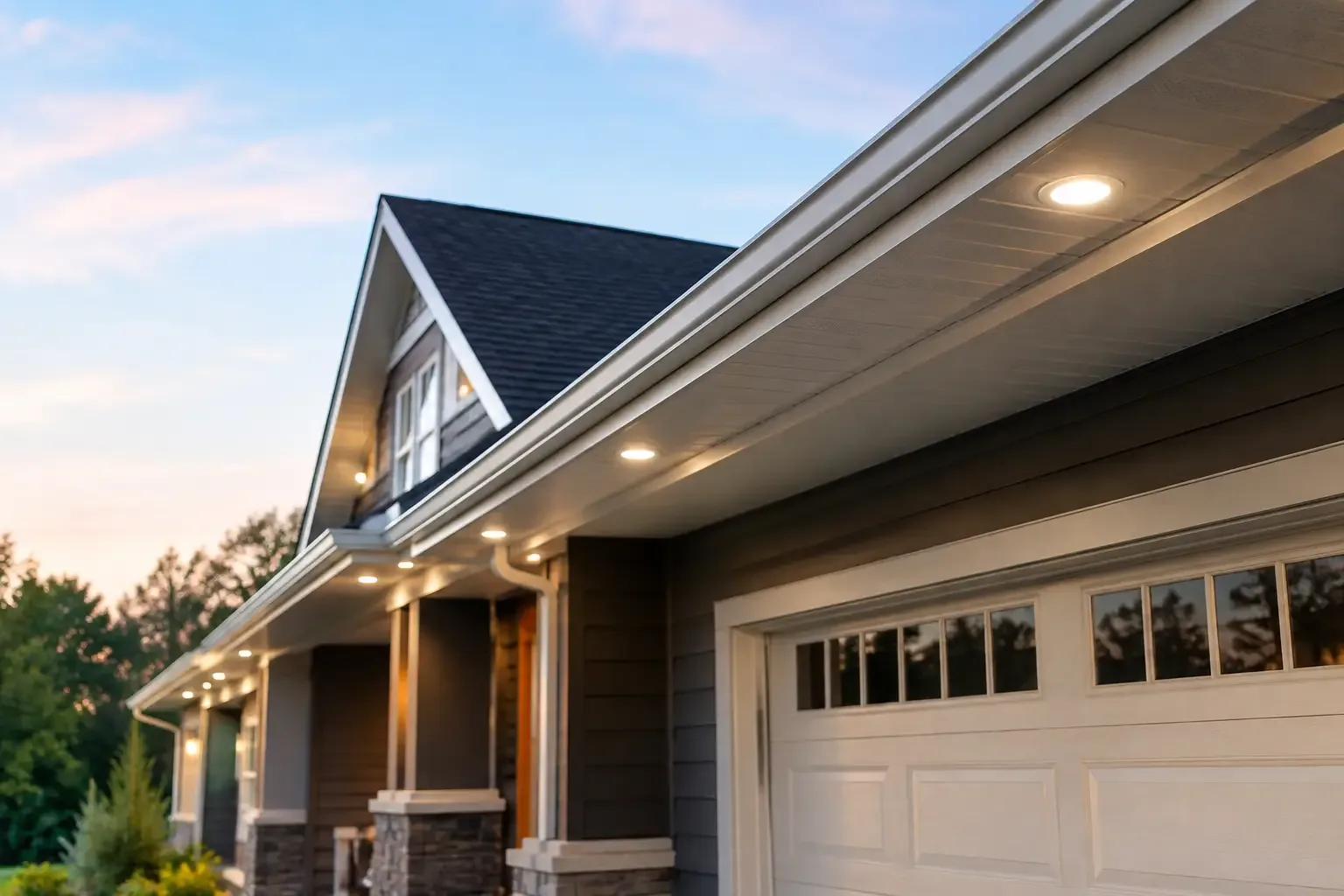
A roofline can make a beautiful home disappear after sunset or give it a finished, welcoming presence every night of the year. The best lights for eaves do more than create a bright outline for December. They should complement your architecture, stay discreet in daylight, and give you easy control over everything from a soft warm-white glow to a full-color celebration.
For homeowners along the Colorado Front Range, that means choosing a system designed for real weather, visible rooflines, and year-round use. The right answer is rarely the brightest option or the cheapest string of lights. It is the system that looks intentional on your specific home.
What Makes the Best Lights for Eaves?
Eave lighting works best when it is treated as an architectural detail, not an afterthought. During the day, the equipment should blend into the fascia, soffit, or trim line instead of looking like a permanent holiday decoration. At night, it should produce even, attractive light without harsh hotspots, sagging wires, or a scattered appearance.
Permanent LED roofline lighting is often the strongest choice for homeowners who want both everyday curb appeal and holiday flexibility. Individual lights are mounted in a low-profile track along the eaves, with wiring routed carefully so the installation feels integrated with the home rather than attached to it. A connected controller then gives the homeowner control from an app.
This approach solves the familiar cycle of climbing ladders, replacing failed bulbs, untangling cords, and finding storage space every winter. More importantly, it gives the home a polished lighting feature for the other eleven months of the year.
Look for warm white and full-color capability
A system limited to multicolor effects may be fun for a few holidays, but it can feel too decorative for nightly use. A system that only provides white light offers a refined look but misses the flexibility many homeowners want for Christmas, Halloween, game days, birthdays, and graduation celebrations.
The most versatile eave lights provide both a convincing warm-white setting and programmable full color. Warm white is the setting most homeowners will use regularly. It adds definition to a roofline, makes a home feel occupied and cared for, and supports an elevated exterior without competing with landscaping or interior window light.
Color should be available when the occasion calls for it, not forced into every evening. This balance is what turns permanent lighting into a year-round home upgrade rather than a seasonal display.
Prioritize a clean daytime finish
The best lighting design begins before the lights turn on. Track color, placement, wire routing, and controller location all affect how the system looks during the day. On a light-colored home, a mismatched track can stand out. On darker fascia, exposed wiring can interrupt an otherwise clean roofline.
A thoughtful installation accounts for the trim materials, roof pitch, visible angles from the street, and the places where a lighting run needs to start or stop. It also considers areas that may need separate control, such as a front gable, garage, patio line, or side elevation.
This is one reason a generic kit can be difficult to get right. Two homes with the same number of linear feet can require very different plans. A simple ranch home may have long, straightforward runs. A home with multiple gables, dormers, peaks, and covered patios needs more deliberate layout work to keep the final result balanced.
Choose Light Placement for the Effect You Want
Eave lights can be installed near the outer edge of the roofline or positioned more discreetly beneath the soffit, depending on the home and desired effect. The goal is not always to make each individual light visible. Often, the more refined result comes from an even wash of light that defines the roofline from the street.
Spacing matters as well. Lights set too far apart may create a dotted appearance. Lights that are overly concentrated can look busy, especially on a smaller façade. Proper spacing should match the viewing distance, roofline shape, and brightness level the homeowner prefers.
If your home has a particularly prominent front elevation, lighting the main gables and garage line may create the impact you want without running lights around every side. For a corner lot or a property with a highly visible side roofline, extending the design can make sense. There is no universal rule. The strongest design is the one that looks complete from the places people actually see your home.
App Control Is Part of the Lighting System
A permanent eave-lighting system should be simple to use after installation day. App control makes it possible to choose colors, adjust brightness, set timers, create schedules, and save favorite scenes without handling a remote or resetting a mechanical outlet timer.
Zones are especially useful on homes with more than one roofline section. You may want warm white on the front façade while keeping a patio area dimmer, or you may want a bold color pattern across the garage during a celebration while the rest of the home stays subtle. Good control design lets you make those changes without turning lighting into a technical project.
Scheduling also changes how homeowners use the system. Instead of remembering to switch lights on at dusk, you can set a nightly schedule that fits your household routine. During the holidays, a scene can run for a defined evening window rather than staying on until morning.
Brightness deserves more attention than it usually gets. A setting that looks great at 6:00 p.m. may feel too intense later at night, especially in a close-knit neighborhood. The best systems give you the range to create a visible, inviting roofline without overwhelming the street.
Weather, Power, and Installation Details Matter
Colorado homeowners need lighting that is planned with changing weather in mind. The equipment itself matters, but installation quality matters just as much. Secure track mounting, protected connections, well-managed wire paths, and thoughtfully located controllers all contribute to a system that looks clean and remains easy to service.
Power planning should happen early. A professional installer will identify a practical power source and discuss where the controller can be placed without disrupting the appearance of the home. That is also the time to consider how the system will be reached if service is ever needed.
Avoid treating eave lighting as a purely DIY electrical project unless you are genuinely comfortable with exterior wiring, mounting methods, and roofline access. Working at height is one concern. Creating a tidy, durable result across corners, peaks, and transitions is another. A few exposed wires or uneven sections can take away from the very curb appeal the project is meant to create.
At Firefly Exterior Lighting, the planning process is built around the home itself. Roofline photos, trim details, viewing angles, and desired uses all shape the proposed design. A visual preview can also help homeowners see whether they prefer a focused front-elevation treatment or a more complete roofline plan before installation begins.
Common Choices That Fall Short
Temporary string lights remain a reasonable option for someone who only wants a short holiday display and does not mind the annual work. They cost less upfront, but they bring back the same ladder time, storage, bulb replacement, and uneven installation each season.
Floodlights can create dramatic color on a wall or landscaping feature, but they are not a substitute for eave lighting. They can produce glare, leave shadows, and make a home look washed in color rather than crisply outlined. They work best as an accent alongside roofline lighting, not as the primary solution for it.
Cheap permanent light kits may look appealing at first, particularly when sold by the foot. The trade-off can show up in daytime visibility, inconsistent color, limited controls, difficult installation, or a lack of support when one section needs attention. Price matters, but so does the finish you will see every time you pull into the driveway.
A Better Way to Decide
Start by deciding how you want your home to look on an ordinary Tuesday night. If the answer is warm, polished, and understated, make sure the system offers a high-quality warm-white scene and enough brightness control to use it comfortably. Then consider the events that matter to your household: holidays, school colors, game days, family milestones, or neighborhood gatherings.
Next, look at your home from the street in daylight. Notice the fascia color, roofline complexity, front-facing gables, garage line, and areas that are most visible on arrival. Those details will guide a lighting plan that feels tailored rather than copied.
The right eave lights should make the home feel more like itself: clean by day, inviting on a normal evening, and unforgettable when there is something worth celebrating.