
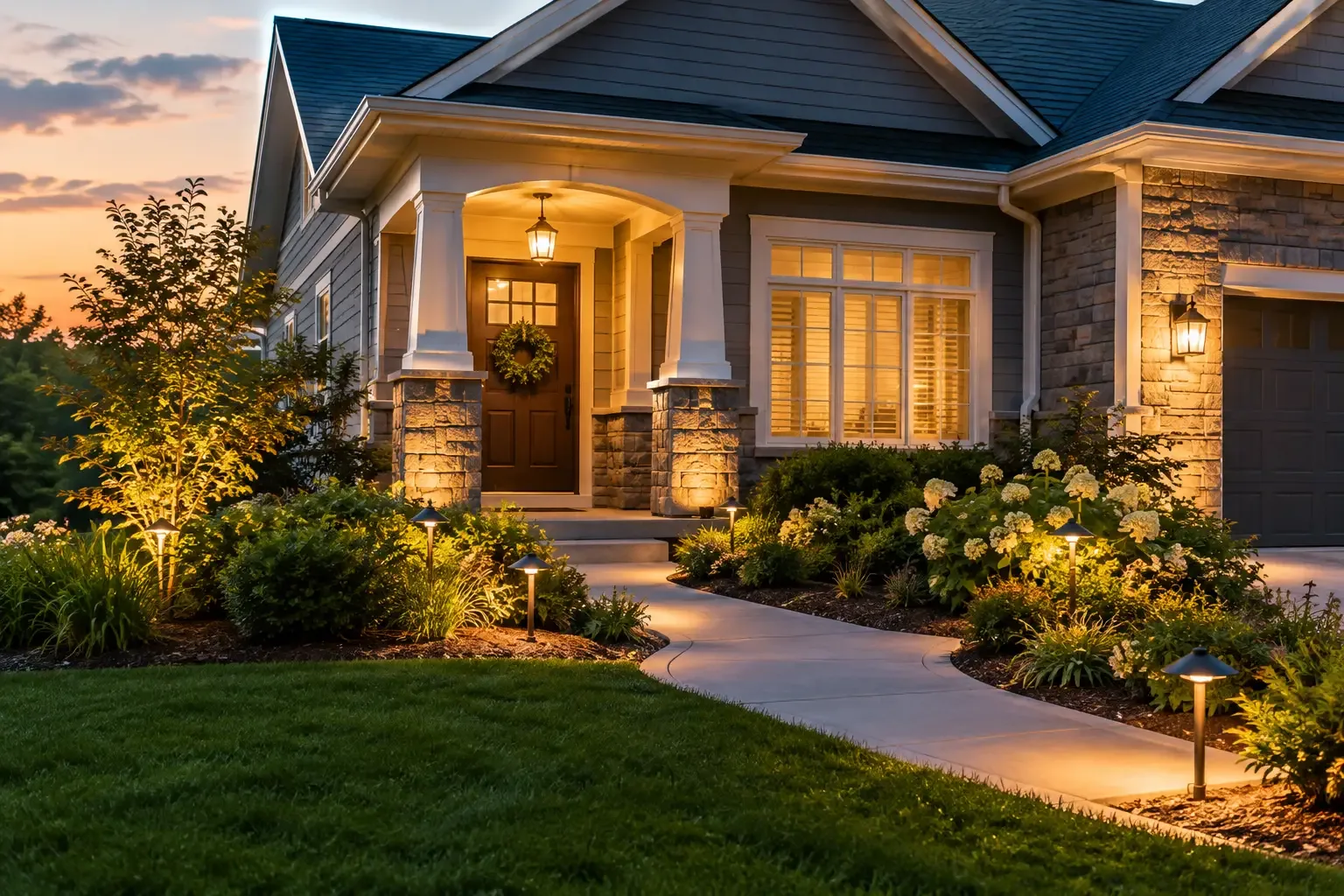
A home can look carefully maintained in daylight and still disappear after sunset. The right curb appeal lighting ideas change that without turning your front elevation into a holiday display every night. Thoughtful exterior lighting gives your roofline, entry, landscaping, and architectural details a composed presence - warm and welcoming for daily use, with color available when the occasion calls for it.
For homeowners along the Colorado Front Range, lighting also has to work with varied rooflines, changing weather, and the reality of long winter evenings. The goal is not simply to add more light. It is to place light where it makes the home feel finished.
Start With the Architecture, Not the Fixture
The most polished homes at night follow the same principle as well-designed interiors: light supports the structure instead of competing with it. Before choosing colors, brightness, or effects, look at what your home already does well.
A steep gable, a long horizontal eave, stone columns, mature trees, or a recessed front entry can all become visual anchors. Lighting should draw the eye through those features in a deliberate order. On a simple ranch home, a clean roofline may be the strongest statement. On a two-story home with prominent entry details, a softer roofline paired with entry lighting may feel more balanced.
This is why a one-size-fits-all lighting plan often falls flat. A lighting layout that looks crisp on a symmetrical facade may feel busy on a home with multiple peaks, dormers, and offset garage bays. Planning around the actual roofline creates a better result than copying a look from another house.
Curb Appeal Lighting Ideas That Work Every Night
1. Outline the roofline with warm white light
Roofline lighting is one of the most effective ways to make a home feel complete after dark. A consistent warm-white line can define the shape of the house, highlight its proportions, and create the kind of quiet evening presence temporary string lights rarely achieve.
For everyday use, warm white is generally the most versatile choice. It feels more architectural than bright cool white and works well with brick, stone, siding, stucco, and darker exterior paint colors. Keep brightness restrained. The roofline should read clearly from the street, not cast a glare across it.
Permanent systems are especially useful here because the track and wiring can be planned for a clean daytime appearance. When the lights are off, the goal is for the installation to fade into the roofline rather than become another visible exterior element.
2. Give the front door its own layer of light
Your entry is where curb appeal becomes hospitality. A porch fixture, sconces, or recessed downlighting can make the approach to the front door safer and more inviting, even when the rest of the home is softly lit.
The trade-off is brightness. An overly bright porch fixture can flatten the facade and make nearby roofline lighting seem dim by comparison. Choose a warm tone and aim for enough light to see steps, locks, and visitors comfortably. If your porch is deep or shaded, two balanced fixtures may look better than one oversized fixture mounted above the door.
3. Use path lights to create an arrival sequence
Path lighting does more than prevent missed steps. It guides the eye from the sidewalk or driveway toward the entry, making the property feel considered before anyone reaches the door.
Avoid placing fixtures like runway markers in a perfectly rigid line. Stagger them where possible, keep them low, and use them sparingly. The light should reveal the path surface and planting edges, not spotlight every inch of lawn. On a short walk, a few well-spaced fixtures often look more refined than a dense row.
4. Light house numbers clearly
A well-lit address is a small upgrade with practical value. It helps guests, delivery drivers, and emergency responders identify the home, while also adding a crisp finishing detail near the entry or garage.
This can be as simple as a nearby downlight or a dedicated backlit number system. Make sure the numbers contrast with the wall behind them and remain readable from the street. Decorative numbers that vanish at night do not improve curb appeal or function.
5. Highlight one or two landscape features
Uplighting can add depth to a front yard, particularly when a mature tree, ornamental grass, stone wall, or textured planting bed sits between the house and the street. The key is restraint. One softly lit specimen tree can look dramatic; lighting every shrub can make the yard feel cluttered.
Consider what the feature looks like in every season. A leafless deciduous tree can create beautiful branching shadows in winter, while an evergreen may hold its shape year-round. In Colorado, this seasonal shift is worth planning for rather than treating landscape lighting as a summer-only decision.
6. Wash stone, brick, or textured walls gently
Homes with masonry, textured stucco, or substantial columns have built-in visual interest. A soft wall wash can reveal that texture and make a facade feel more dimensional at night.
Placement matters more than fixture count. Light aimed too directly at a wall can create hot spots and harsh shadows. A professional layout considers the fixture angle, the distance from the surface, and where the viewer will stand. The best result is often subtle enough that people notice the home looks better before they notice why.
7. Separate the garage from the front entry
For many suburban homes, the garage occupies a large portion of the front elevation. Leaving it completely dark can make the home feel unbalanced, but treating it as the main focal point is rarely the answer.
Use controlled lighting to give the garage visual weight without overpowering the entry. Roofline lighting across the garage can establish continuity, while sconces or modest downlighting around garage doors add scale. If the driveway is wide, make sure the path to the front door still has a clear visual pull.
Add Color Without Losing the Everyday Look
Color is where permanent exterior lighting becomes more than a nightly curb appeal upgrade. The same system that provides warm-white roofline lighting can shift for holidays, game days, birthdays, graduations, and neighborhood events.
The most successful color scenes usually have a clear purpose. Red, white, and blue for a patriotic holiday feels intentional. Orange and purple can give Halloween personality. Team colors can be fun for a watch party. But using every available color at maximum brightness every night can overwhelm the architecture and frustrate nearby neighbors.
A good rule is to use color as an accent or an event setting, not as a replacement for the home’s normal lighting plan. App-controlled zones make this easier. You might keep the main roofline warm white while adding a subtle color treatment to a gable, garage peak, or entry section.
Make Control Part of the Design
Convenience is one of the reasons homeowners move away from temporary holiday strands. A lighting system should not require climbing a ladder, resetting timers, or walking outside in cold weather to make a simple adjustment.
With app control, you can set a warm-white scene to turn on at dusk, lower brightness later in the evening, and turn off at a preferred time. You can also create separate zones for different roofline sections, which is helpful when a front-facing gable needs a different treatment than a side elevation or patio area.
Schedules matter because they keep the home looking consistent. A house that glows warmly from sunset until bedtime feels intentional. A house that stays at full brightness until sunrise may not. The right settings depend on your street, your landscaping, and how visible your home is from nearby roads.
Plan for a Clean Daytime Finish
Nighttime photos can make any lighting concept look appealing. The better question is what the home looks like at noon. Permanent lighting should be designed around discreet track placement, concealed wiring routes, and a controller location that is protected but accessible.
This is where professional planning earns its place. The roofline needs to be evaluated for mounting surfaces, transitions, corners, and power access. A visualizer preview can help you compare layouts before installation, especially if you are deciding whether to light every peak or focus on the most visible sections.
At Firefly Exterior Lighting, that planning is built around the individual home rather than a pre-set package. Details such as trim color, roofline complexity, controller placement, and the scenes you expect to use all shape the final design.
A Simple Way to Choose Your Lighting Priorities
If you are deciding where to invest first, begin with the elements people see from the street every day: the roofline, the front entry, the walkway, and one landscape feature with real character. That combination creates depth at multiple levels - high, eye level, and ground level.
Then consider how you want the home to feel on an ordinary Tuesday evening. If the everyday warm-white setting looks balanced and welcoming, holiday colors become a bonus rather than the whole reason for the system. Choose lighting that respects your home’s architecture, makes arriving home feel better, and gives you a polished look without another season spent on a ladder.