
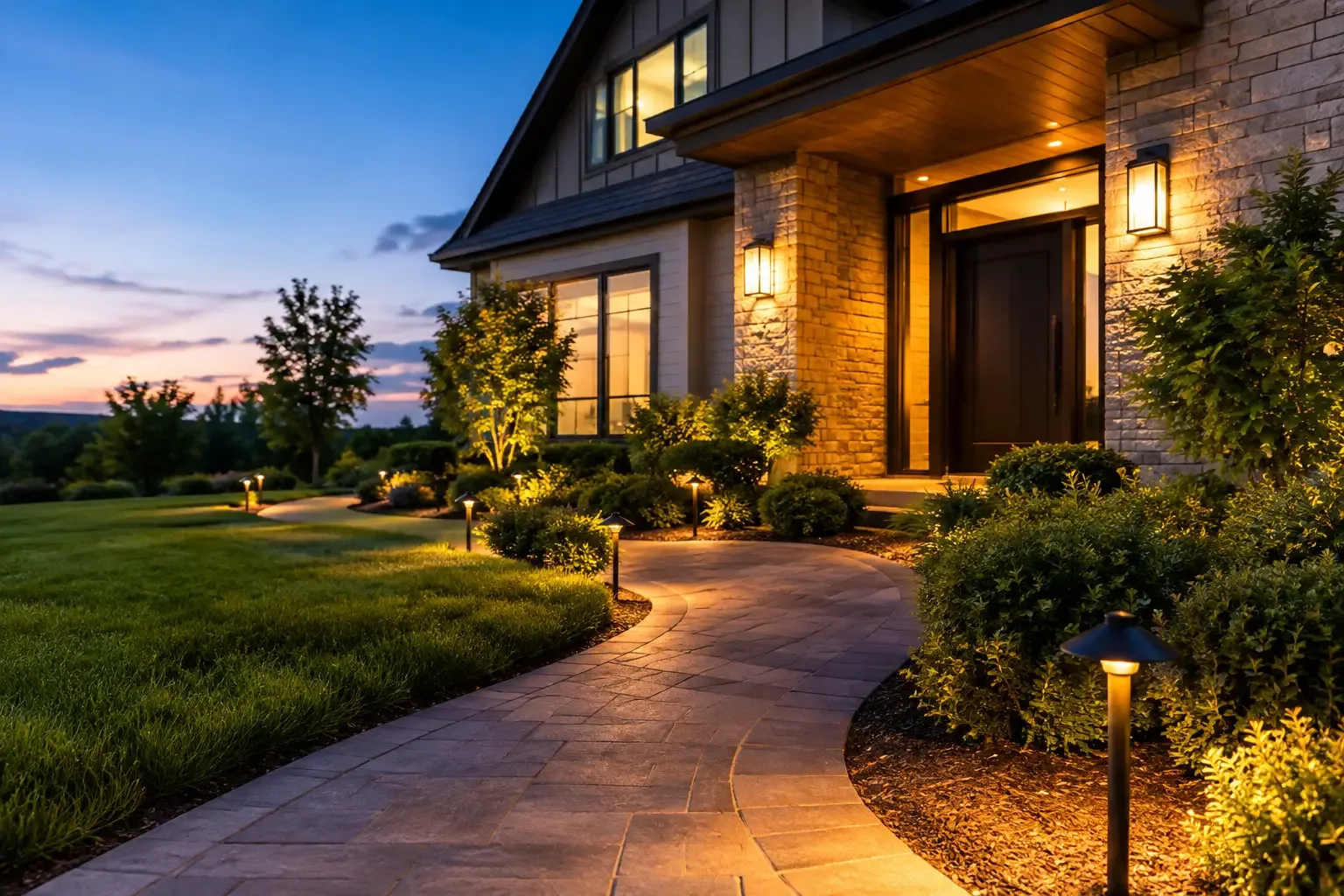
A beautiful roofline should not disappear as soon as the sun goes down. The right exterior lighting gives your home a finished, welcoming presence on an ordinary Tuesday, then shifts easily into full color when Christmas, Halloween, game day, or a family celebration arrives.
For homeowners who are tired of climbing ladders, replacing failed strands, and finding storage space for temporary holiday lights, permanent roofline lighting is a different kind of upgrade. It is not just decoration waiting for one season. Thoughtfully designed lighting becomes part of the home’s architecture - clean by day, memorable by night.
What Exterior Lighting Should Do for Your Home
Exterior lighting has several jobs, and a strong system balances all of them. It should improve curb appeal without looking harsh, support the way you use your home throughout the year, and remain easy to control without turning into another project on your to-do list.
Warm-white lighting is usually the foundation. Along a roofline, it can define the shape of a home, bring out clean trim details, and create the polished look that many homeowners want after dusk. The effect should feel intentional rather than overly bright. A ranch home, two-story traditional home, or more modern elevation may each need a different brightness level and layout to look its best.
Color adds another layer of flexibility. Instead of installing and removing separate holiday strands, homeowners can choose a scene in an app, adjust the colors, and set a schedule. A soft warm-white look can run nightly, while red and green, orange and purple, team colors, or a custom birthday display can be ready in moments.
That versatility is valuable, but restraint matters. More color is not always better, especially for everyday use. The best permanent exterior lighting systems make it simple to choose an understated architectural setting when the occasion calls for it and a brighter, celebratory scene when it does not.
Permanent Roofline Lighting vs. Temporary Strands
Temporary holiday lights can create a familiar tradition, but they also create a predictable annual task. There is the ladder work, the effort of attaching clips, the extension cords, the weather, and the inevitable troubleshooting when one section stops working. At the end of the season, there is removal, coiling, storage, and the chance that next year’s strands will need to be replaced.
Permanent lighting changes that cycle. The equipment is installed once in a purpose-built track that follows the home’s roofline or trim. During the day, the goal is a low-profile appearance that does not compete with the home’s exterior. At night, the lights can illuminate the structure with warm white or programmed color.
The trade-off is straightforward: permanent lighting requires more planning up front than buying a few boxes of seasonal lights. Every house has its own roof angles, eaves, peaks, power access, and wiring considerations. That is precisely why the design process matters. A system that is planned around the property will look more intentional and be easier to enjoy over time.
A Clean Daytime Finish Starts With the Design
The most successful exterior lighting installations do not begin with a generic product layout. They begin with the house.
A professional design considers which rooflines are most visible from the street, how the fascia and soffit are constructed, where a controller can be placed, and how wiring can be routed discreetly. It also considers what the homeowner wants to see at night. Some prefer a fully outlined roofline. Others want to emphasize the front-facing peaks, garage line, or a distinct architectural feature.
In Colorado, this tailored approach is especially useful. Homes across the Denver metro and Front Range vary widely, from newer suburban elevations in Highlands Ranch and Centennial to established homes in Lakewood, Arvada, and Littleton. The right placement for one home may not be the right placement for the next.
Before installation, a visual preview can help turn an idea into a clear plan. Seeing a proposed lighting layout on a photo of your own home helps answer practical questions early: Which lines should be illuminated? Is the design balanced? Would a subtle nightly look be enough, or does the home call for a broader roofline treatment?
How App-Controlled Exterior Lighting Fits Real Life
Convenience is one of the strongest reasons homeowners choose permanent lighting. A system should not require lighting expertise or frequent manual adjustments. With app control, you can select scenes, adjust brightness, set timers, organize zones, and schedule lighting around the way your household actually lives.
For example, you may want warm white lights to come on at dusk and turn off before bedtime. During the holiday season, you might schedule a festive color scene for evenings only. If you are hosting a graduation party or watching a big game, you can change the look without stepping outside or handling a single extension cord.
Zones make larger or more detailed rooflines even more useful. Depending on the system design, separate sections can be controlled independently, giving you the ability to keep a front gable warm white while adding celebratory color to another line. This is not about making every night flashy. It is about having control when you want it.
During handoff, homeowners should understand the basics: how to choose a scene, change brightness, create a schedule, and use zones. Good installation includes that training, so the system feels approachable from the first night rather than becoming a feature you only partially use.
Planning the Installation Without Guesswork
A permanent lighting project should feel clear well before installation day. The initial conversation typically starts with the home’s address, roofline photos, and a discussion of your goals. Are you primarily replacing holiday lights? Do you want nightly architectural lighting? Are there specific holidays, teams, or family events you want to celebrate?
From there, the proposal should reflect the actual property rather than a one-size-fits-all price. Roofline length is only one part of the equation. Peaks, access, controller location, electrical needs, trim details, and preferred lighting coverage can all affect the final scope.
On installation day, the emphasis should be on careful placement and hidden wiring routes. The visible result matters, but so does the work behind it. Clean track alignment, thoughtfully positioned components, and secure connections support a polished appearance and a system that is easy to operate.
If financing is part of your decision, discuss it during the proposal stage. It is also wise to review warranty terms and understand what ongoing support covers. A permanent exterior upgrade deserves the same level of clarity you would expect from any significant improvement to your home.
Choosing the Right Look for Every Season
The most enduring exterior lighting designs are built around warm white, not around a single holiday. Warm white gives the home a composed, elevated appearance during regular evenings, whether you are arriving home from work, welcoming guests, or simply enjoying the view from across the street.
Then, color becomes the optional layer. Christmas may call for traditional red and green, while Halloween can be orange and purple. Patriotic holidays, school colors, sporting events, birthdays, and neighborhood gatherings all offer reasons to change the scene. Because the lights are already installed, the decision can be spontaneous rather than a weekend-long setup project.
Brightness deserves attention here. A setting that looks great from the sidewalk may feel too intense late at night or in close proximity to neighboring homes. Start with a lower level for everyday use, then increase it for holidays or events if the look calls for more impact. The goal is visible, refined illumination - not glare.
Questions Homeowners Commonly Ask
Will permanent lights be noticeable during the day?
They should be discreet. Track color, placement, and wiring routes are selected to complement the roofline and trim. No installation is completely invisible at close range, but a well-planned system should preserve the clean appearance of the home from normal viewing distances.
Can I use the lights year-round?
Yes. That is one of the central advantages. Warm white lighting can be used for nightly curb appeal, while full color is available whenever you want to mark an occasion.
Do I need to know how to program lighting?
No. The app is designed for practical homeowner use. Once you know how to select scenes, adjust brightness, and create schedules, daily operation is straightforward. A professional installer should walk you through those controls after setup.
Is permanent lighting right for every home?
It depends on the home’s architecture, roofline visibility, and the homeowner’s goals. Properties with visible eaves and defined front elevations often see the most dramatic transformation. A consultation and visual layout are the best way to decide what makes sense for your home.
A permanent lighting system is most rewarding when it feels like it was always meant to be there. Start with the rooflines you love, choose a warm-white setting you would be happy to use every night, and let color be there whenever life gives you a reason to celebrate.