
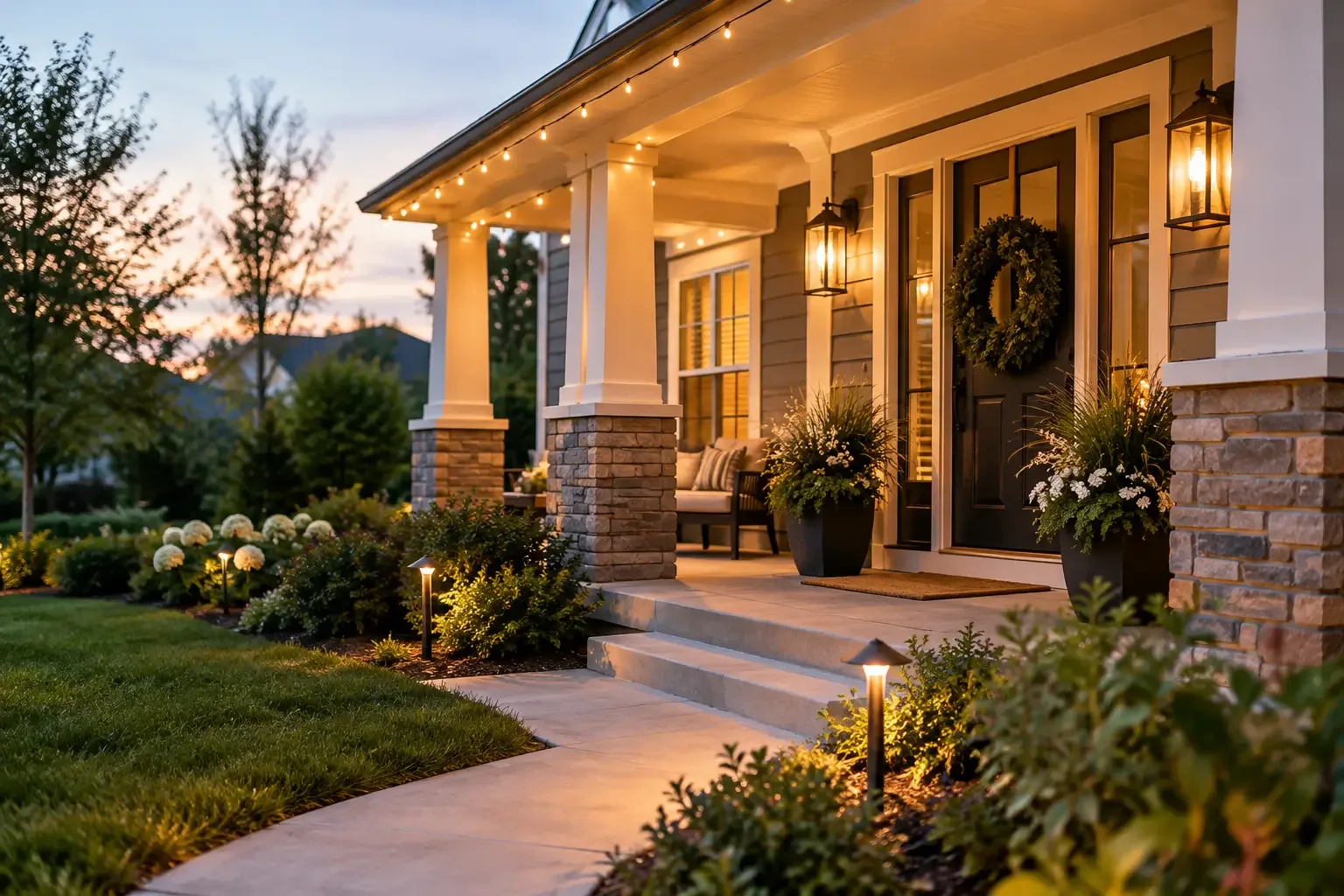
A ladder, a tangled bin of strands, cold fingers, and one section that quits halfway through installation: traditional holiday lighting asks homeowners to repeat the same frustrating routine every year. A permanent roofline system changes that equation. It gives your home a polished, warm-white look on ordinary evenings, then puts full-color celebration lighting a few taps away when the calendar calls for it.
For homeowners across Denver and the Colorado Front Range, the appeal is not simply avoiding the annual setup. It is having lighting that feels considered for the home itself - clean by day, memorable by night, and designed around the roofline rather than clipped on as an afterthought.
Holiday Lighting Should Start With the Home
The best permanent lighting installations do not begin with a preset package. They begin with the architecture. A steep gable, broad front porch, dormers, second-story peaks, and trim details all affect where lighting will look balanced and where equipment can remain discreet.
That planning matters because roofline lighting is highly visible after dark. Even spacing, thoughtful corners, and a clean visual rhythm make the difference between a home that looks intentionally illuminated and one that simply has color on it. During the day, the goal shifts. Tracks should sit neatly along the fascia or trim, wiring should follow concealed routes where possible, and the finished system should preserve the character of the exterior.
This is also why a photo review or visualizer preview is useful before installation. It helps homeowners see how a lighting plan may frame their home, decide whether they want to include a garage line or porch detail, and talk through the right level of coverage. More lights are not always better. A well-proportioned design often delivers the stronger result.
Permanent Holiday Lighting, With a Different Everyday Setting
A permanent system earns its place outside the holiday season when it can do more than run red and green in December. Warm-white architectural lighting can add a refined evening presence for a dinner on the patio, a late arrival home, or simply a more finished streetscape.
The distinction is important. Everyday lighting should be subtle enough to complement the house rather than compete with it. Lower brightness, warm-white tones, and carefully selected zones tend to create that effect. Then, when Halloween, Christmas, the Fourth of July, a graduation, or a game-day gathering arrives, the same system can shift into full color.
That flexibility is the practical advantage of permanent holiday lighting. Instead of buying separate strands for each occasion, storing them, and finding out which section failed after a year in the garage, homeowners can use one installed system in different ways. It is an exterior upgrade first and a seasonal tradition made easier second.
What Effortless Control Actually Looks Like
App control is valuable when it simplifies the routine, not when it turns the lighting into another technical project. A well-configured system should let you select a scene, adjust brightness, turn individual areas on or off, and set timers without standing outside or climbing a ladder.
Zones are especially helpful on larger or more detailed homes. You may want the front roofline in warm white most evenings while leaving a side elevation off. For a holiday display, you might bring every installed section into the same color pattern. For a party, the porch, garage, and upper roofline can be treated differently. The right setup depends on how your home is viewed from the street and how you expect to use it.
Schedules remove one more small task from the week. Set the lights to turn on after dusk, go off at a reasonable hour, or run a favorite holiday scene only during a particular window. Brightness control matters, too. A setting that feels inviting on a quiet Tuesday may need more energy for a neighborhood holiday weekend. The ability to adjust it is more useful than a one-level system that is always either too dim or too intense.
The Installation Details That Protect the Finished Look
Permanent lighting is only as refined as the installation behind it. The visible effect may be simple, but the work involves selecting track placement, mapping wire paths, placing the controller thoughtfully, and connecting the system so it is accessible for operation and service.
A professional consultation should account for the home’s exterior materials, power access, roofline layout, and the route needed to keep wiring as inconspicuous as possible. It should also address practical expectations. Not every roofline needs coverage, and not every property has the same installation approach. A single-story ranch and a multi-gable two-story home require different planning.
At Firefly Exterior Lighting, the process is designed around those property-specific decisions. Homeowners can share address details and roofline photos, review a tailored plan, and understand the proposed scope before work begins. After installation, training should cover the controls that matter most: scenes, zones, brightness, timers, and schedules.
This professional approach is not about making a home flashy. It is about avoiding the common compromises of temporary displays: exposed extension cords, uneven clips, sagging lines, and a daytime appearance that looks unfinished.
When Permanent Lighting Is the Right Fit
Permanent lighting is an especially strong fit for homeowners who consistently decorate, value curb appeal, and want to stop handling the same seasonal chore. It also makes sense for people who enjoy marking more than one holiday or life event throughout the year. A birthday, anniversary, new baby, school colors, or a visiting family celebration can all be acknowledged without a last-minute trip to buy décor.
Still, it is worth being clear about the trade-off. A permanent system is a planned home improvement, not the lowest-cost way to put lights up for one Christmas. If you only decorate occasionally, prefer changing the physical style of your display every year, or do not have a visible roofline you want to highlight, temporary lights may remain the better choice.
For many established homes, though, the long-term value is convenience paired with a cleaner finish. Rather than reinstalling and replacing seasonal products, you invest once in lighting that can serve everyday use and celebrations alike.
Questions Homeowners Often Ask About Holiday Lighting
Will the tracks be noticeable during the day?
The objective is a low-profile daytime finish. Track color, placement, roofline material, and viewing distance all influence visibility, which is why an on-site or photo-based assessment is valuable. A properly planned system should look integrated with the trim, not like a temporary strand left up after the season.
Can the lights stay white most of the year?
Yes. Warm-white settings are a natural choice for nightly curb appeal, while color scenes can be saved for holidays and special occasions. That balance is often what makes permanent lighting feel appropriate year-round.
Is the system difficult to use?
It should not be. Homeowners do not need lighting expertise to select saved scenes, adjust a zone, or create a schedule. The installer should walk through the app after setup so the controls feel familiar from the first evening.
What should be included in an estimate?
A useful estimate reflects the specific home, including the roofline sections being illuminated, access considerations, equipment placement, and installation scope. Ask how the design handles wiring, where controls will be located, what training is included, and how warranty or support terms are documented.
The most satisfying holiday display is the one you can enjoy from the sidewalk, the sofa, or halfway through a busy December week - without wondering where the ladder went. Start by looking at your roofline as an architectural feature, then choose a lighting plan that gives it the attention it deserves whenever you want it.