
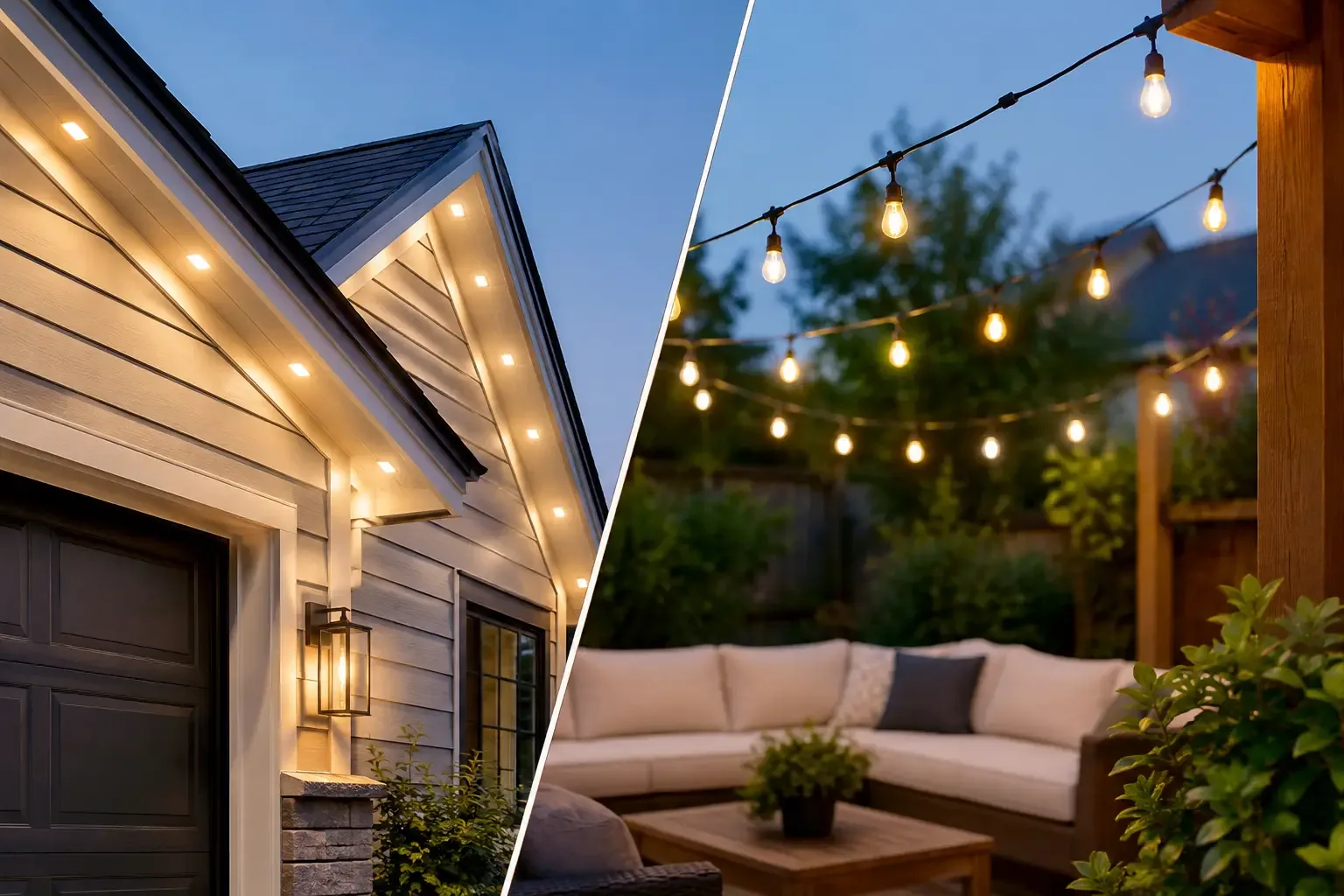
A ladder in the garage, tangled bins of strands, and one section that quits working on December 18: that is the familiar routine permanent LEDs vs string lights brings into focus. Both can make a home feel festive, but they solve very different problems. One is a temporary decoration you put up each year. The other is a professionally planned exterior feature designed to stay in place and work well beyond the holidays.
For homeowners who take pride in a clean roofline and want more control over how their home looks after dark, the better choice often comes down to more than color or brightness. It comes down to appearance, effort, versatility, and how you want to use lighting throughout the year.
Permanent LEDs vs String Lights: The Core Difference
Traditional string lights are designed for short-term use. You hang them along gutters, shingles, fascia, railings, or landscaping, connect them to power, and remove them once the season ends. They can be charming and affordable at the outset, especially for a simple holiday display. But their visual result depends heavily on how carefully they are installed each year.
Permanent LED lighting is designed around the home itself. Low-profile lights are installed in a discreet track along selected rooflines or trim, with wiring routes and controller placement planned before installation begins. During the day, the system is intended to blend into the architecture. At night, it can shift from refined warm-white lighting to full-color scenes controlled from an app.
That difference changes the ownership experience. String lights ask you to repeat the work. Permanent lighting asks you to choose a scene, set a schedule, and enjoy the result.
Daytime Appearance Matters More Than Most Homeowners Expect
A holiday display only looks polished at night if the daytime setup does not distract from the home. With string lights, cords, clips, extension connections, and uneven runs can be visible from the street. Rooflines with multiple peaks, dormers, or varying fascia depths can make a temporary installation especially difficult to keep straight and balanced.
Permanent LEDs are not invisible in every condition, and a responsible installer should never promise that they are. Their daytime appearance depends on the trim color, roofline material, track placement, and viewing distance. The goal is a clean finish that reads as part of the exterior rather than a seasonal strand left behind.
This is where site-specific planning matters. A lighting layout should account for the lines worth highlighting, the portions of the home that should remain quiet, and the wiring paths that preserve the finished look. A thoughtful design does not simply cover every edge with lights. It uses the architecture to create a more intentional nighttime profile.
The Annual Effort Is Not Just About Time
Hanging string lights can be a weekend project, but the real cost is usually spread across the whole season. There is setup, testing, replacing failed bulbs, adjusting sagging sections, managing timers, and taking everything down in cold weather. There is also ladder work around rooflines, which many homeowners would rather avoid altogether.
For a single-story home with a straightforward front eave, temporary lights may still be a reasonable choice. If you enjoy decorating, like changing your display every year, and only want lighting for a few weeks, string lights provide flexibility without a larger upfront commitment.
The equation changes for homeowners with tall rooflines, complex gables, or a desire for a consistently finished look. Permanent lighting removes the recurring installation and removal cycle. Once the system is professionally installed and configured, holiday lighting can be a matter of selecting a preset from your phone instead of climbing a ladder.
More Than Christmas Color
String lights are often purchased with one purpose in mind: Christmas. You can certainly reuse white strands for other occasions, but changing colors, zones, patterns, or schedules usually means buying separate products and adjusting the physical setup.
A permanent LED system is built for a broader calendar. Warm white can add an understated architectural glow for evenings at home. Full-color scenes can mark Halloween, Independence Day, game days, birthdays, graduations, and neighborhood gatherings. You can also choose to keep the home dark when that is your preference.
That versatility is most valuable when it remains easy to use. App-based controls allow homeowners to adjust brightness, choose colors, create timers, and schedule scenes without handling the fixtures themselves. On homes with distinct roofline sections, zones can allow a more tailored look rather than treating the entire exterior as one continuous run of color.
More options do not have to mean a flashy result. A well-designed system gives you the ability to create high-impact color when the moment calls for it, then return to a quiet warm-white setting the next night.
Cost: Upfront Price vs Long-Term Value
String lights cost less to purchase initially. That is their clearest advantage. For a homeowner who decorates occasionally or is working with a limited seasonal budget, they can deliver a visible effect quickly.
Permanent lighting is a home improvement project, so the upfront investment is higher. The final price depends on the length and complexity of the roofline, access, the number of lighting zones, controller requirements, and the installation approach. A professional estimate should reflect the actual home rather than a one-size-fits-all number.
The longer-term value is different, too. Temporary strands may need replacement as bulbs, sockets, wiring, clips, or timers wear out. They also require storage and repeated labor, whether that labor is your own or paid for through seasonal installation services. Permanent LEDs are not maintenance-free, but they are designed to eliminate the annual cycle of hanging and removing a full display.
For many homeowners, the question is not whether permanent lighting is cheaper in year one. It is whether the convenience, presentation, and year-round use justify making the upgrade once rather than rebuilding the display every holiday season.
Installation Quality Shapes the Result
A permanent system should not be treated like a strand of lights that happens to stay up. Placement affects how the light lands on the home, how visible the fixtures are during the day, and whether the finished roofline looks crisp from the street.
At Firefly Exterior Lighting, the planning process centers on the individual property. That includes evaluating rooflines and trim, considering discreet track placement, mapping wiring routes, and discussing how the homeowner wants to use warm white and color scenes. A visual preview can help turn a general idea into a more confident decision before installation begins.
After installation, the system should feel approachable. Homeowners should understand how to use scenes, brightness settings, timers, schedules, and zones without needing to become lighting experts. The technology is there to make the home easier to enjoy, not to create another complicated task.
When String Lights Still Make Sense
Permanent LEDs are not automatically the right fit for every property or homeowner. String lights can be a smart choice for renters, for homes where exterior changes are not permitted, or for people who only want a temporary accent around a porch, patio, or small gathering space.
They also suit homeowners who genuinely enjoy the ritual of seasonal decorating and want to redesign their display from scratch every year. A temporary setup can be playful, personal, and effective when its limits are part of the appeal.
Permanent lighting makes more sense when you want the roofline itself to become a dependable design feature. It is especially compelling if seasonal ladder work has become a burden, if you have paid for holiday-light installation more than once, or if you want lighting that earns its place after the decorations come down.
Choose the Experience You Want Every December
The practical difference between permanent LEDs and string lights is simple: one asks for a fresh installation every year, while the other is ready when the occasion arrives. The more meaningful difference is how each option makes your home feel. Temporary strands can create a moment. A well-planned permanent system can make the home look considered, celebratory, and distinctly yours throughout the year.
Before choosing, stand across the street from your home at dusk and look at the roofline as a design opportunity. The right lighting plan should respect that architecture, fit the way you celebrate, and leave you with less work when the next holiday season arrives.